
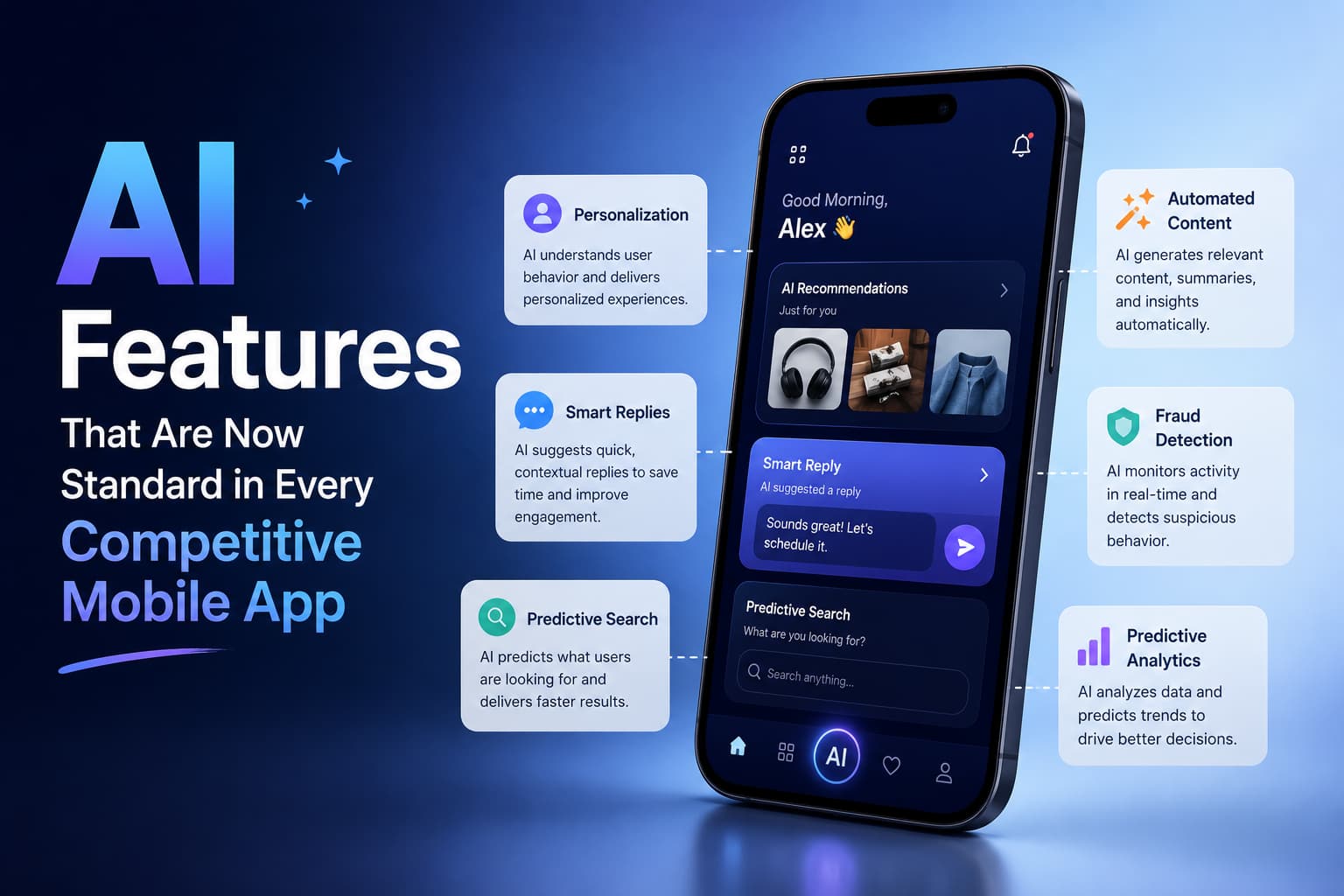
Mobile apps change fast today. Users want instant results. They hate waiting for slow screens. Smart AI tools solve this exact problem.
Over 63% of top developers use AI now. Old, basic apps feel outdated quickly. AI guesses what you need next. It saves users valuable time every day.
App stores hold millions of competing choices. Frustrated users delete slow apps immediately. Smart features keep people coming back for more.
AI helps your app stay competitive today. In this guide, you will learn about essential tools. These features are now standard for modern apps.
What Makes an AI Feature “Standard”?
A feature becomes standard when users stop noticing it. They expect it to work instantly. If an app lacks it, users feel friction.
Today, over 70% of mobile apps use AI features. Over 80% of users expect these smart tools by default. AI is no longer a luxury badge. It is baseline functionality.
Key Criteria for Standard AI Features
- High User Expectation: Users assume the app knows their preferences.
- Invisible Operation: The feature works silently in the background.
- Immediate Value: It reduces taps, friction, or waiting time.
Top 15 AI Features That Are Now Standard In Mobile Apps
Here are the top AI features. They power your favorite mobile apps today.
Personalized Content Recommendations
Apps track your past clicks carefully. They see what you watch. Then they show similar interesting content. Netflix does this very well. You find new shows easily. You stay on the app longer.
Smart algorithms learn your daily habits. They analyze your scroll speed. They notice your favorite genres. You get custom home feeds instantly. The app feels built just for you. This keeps you coming back for more.
AI-Powered Search
Old search bars were quite dumb. You typed exact words. Now search understands your actual intent. You can misspell some words. The app still finds your item. It saves you precious time.
AI parses complex, natural queries. It scans millions of results fast. You get exact answers on top. Search feels instant and accurate.
Intelligent Chatbots and AI Assistants
You get stuck sometimes. You need fast help. Chatbots talk to you immediately. They answer basic questions fast. They replace slow human agents entirely. You get a quick fix.
Smart assistants understand your mood. They handle complex issues easily. They work day and night. You never wait in line. Support feels smooth and instant.
Personalized Notifications
Bad apps send random alerts. Smart apps watch your active times. They message when you look. They know your exact time zone. You open the app much more.
AI predicts your exact daily routine. It sends custom, helpful reminders. You get updates you actually want. This stops annoying spam completely. Alerts feel relevant, timely, and personal.
AI-Based Product Recommendations
Shopping apps track your exact habits every day. They see your cart items. Amazon shows products you likely want. They match items perfectly for you. You buy more things. Shopping becomes very easy.
AI algorithms scan millions of product pairings instantly. They spot buying trends across thousands of shoppers. You get tailored bundles at checkout. This stops decision fatigue completely. Stores boost average order values effortlessly.
Smart Image Recognition
You photograph some nice shoes. The app finds them online immediately. Google Lens uses this tech. It scans the real world. It identifies objects for you. You shop without typing words.
Cameras do more than take photos. They read barcodes instantly. They translate signs on street corners. You get instant facts through visual search. Shopping feels completely effortless.
Voice Recognition and Voice Commands
Typing on small screens often feels slow. You can speak directly to your phone instead. Modern AI processes natural speech instantly. It cuts through background noise and recognizes complex accents.
You execute tasks without hands. Drivers update route maps via voice. Shoppers add products to carts quickly. Voice commands save significant effort. They make apps accessible while multitasking.
Predictive Analytics
Apps guess your next likely move. A fitness app learns your active habits. It knows your exact rest times. It changes your workout plan automatically. You stay on track easily.
Smart systems analyze past app behavior fast. They spot user actions before they happen. Ride apps predict high demand early. You get smooth, hassle-free experiences.
AI Fraud Detection and Security
Fraudulent activities adapt quickly, threatening user security constantly. AI fraud detection monitors transaction patterns in real time. It analyzes location, device metrics, and spending habits instantly.
System algorithms flag unusual behavior before damage occurs. Banks block unauthorized charges in milliseconds. Facial recognition replaces weak passwords completely. This automated vigilance protects sensitive financial data. Users gain absolute peace of mind while using mobile apps.
AI-Powered Content Generation
Writing long posts takes too much time. AI creates custom text for you instantly. You type a simple prompt. The app generates a complete draft. It writes emails, social posts, and captions.
Canva uses AI to build quick graphics. You save hours of manual work. The output needs only quick edits. Content creation becomes fast and simple.
Real-Time Language Translation
Language barriers vanish completely with modern translation tools. Advanced AI processes spoken words and text instantly across hundreds of languages. Apps translate live audio during conversations without awkward delays.
Travel apps scan foreign street signs using smart cameras. You read menu items, directions, and documents in your native language. Real-time translation turns global communication into an effortless experience for every user.
AI-Based Smart Camera Features
Modern camera apps rely on embedded neural network chips. They adjust focus, exposure, and color balances instantly in real time. AI algorithms clean up image noise during low-light night shots.
Integrated editing features let you remove unwanted background objects. Cameras automatically blur background clutter for clean portrait shots. Users capture professional photos effortlessly without manual camera adjustments.
Predictive Text and Smart Typing
Predictive text speeds up typing on touchscreen devices significantly. Modern keyboards rely on context-aware language models to anticipate your next word. They process entire sentence structures to offer accurate suggestions.
Algorithms instantly autocorrect typos based on your personal slang and typing habits. Smart keyboards learn new phrases automatically from daily chats. This eliminates repetitive keystrokes, reducing typing mistakes and saving users time.
Personalized User Onboarding
New app signups often trigger user drop-off due to rigid setups. AI transforms onboarding by analyzing user roles, past activity, and preference choices in real time.
Instead of generic tours, apps build dynamic walkthroughs tailored to individual goals. First-time users see features relevant strictly to their intent. This reduces friction immediately, shortens learning curves, and boosts long-term app retention.
AI-Powered Accessibility Features
Apps must serve every single person seamlessly. Modern AI automatically generates live video captions for hearing-impaired users. Smart screen readers describe photos, buttons, and complex screen layouts out loud.
Voice controls help people with physical disabilities navigate without touches. Dynamic text tools adjust font contrast and sizes on the fly. AI removes digital barriers completely, making apps accessible to all.
Benefits of Integrating AI Into Mobile Apps
Adding smart features brings massive business advantages. Apps run faster, cut costs, and make money quicker.
- Drives User Engagement: Personalized experiences keep people on your app longer. McKinsey reports personalization boosts revenue by up to 15%.
- Cuts Operational Costs: Chatbots handle basic support 24/7. They resolve up to 80% of routine questions without human help.
- Reduces User Friction: Smart search and predictive text save time. Users find items quickly and buy more products.
- Prevents Customer Loss: AI spots inactive user patterns early. Apps send targeted alerts to bring users back before they leave.
Building AI tools gives you an immediate market advantage over traditional apps.
Challenges Businesses Should Consider
Integrating AI isn’t without hurdles. Companies must navigate key technical and financial obstacles before rolling out these capabilities.
- High Infrastructure and API Costs: Running real-time AI models scales server costs fast. Investing in professional AI development services and third-party API calls can add up quickly as user traffic spikes.
- Data Privacy and Compliance Risks: AI depends heavily on user data. Global laws like GDPR enforce strict rules on data storage and usage. Mishandling sensitive data triggers severe legal penalties.
- Hallucinations and Data Quality Issues: Poorly trained algorithms give inaccurate output or hallucinate facts. Developers spend nearly 40% of initial project time just cleaning raw data.
- Continuous Model Maintenance: AI performance drifts over time as user habits change. Systems require ongoing monitoring, retraining, and updates to stay accurate.
Deploying smart features takes a clear strategy to ensure reliable performance and a solid return on investment.
Conclusion
AI features are standard expectations in modern mobile apps today. Users demand fast, personalized, and secure experiences every time they open an app.
Building smart features takes clear planning and upfront investment. However, the payoff in user retention and efficiency outweighs the initial challenges. Adopt these core AI capabilities now to keep your mobile app competitive.





Leave a Reply