
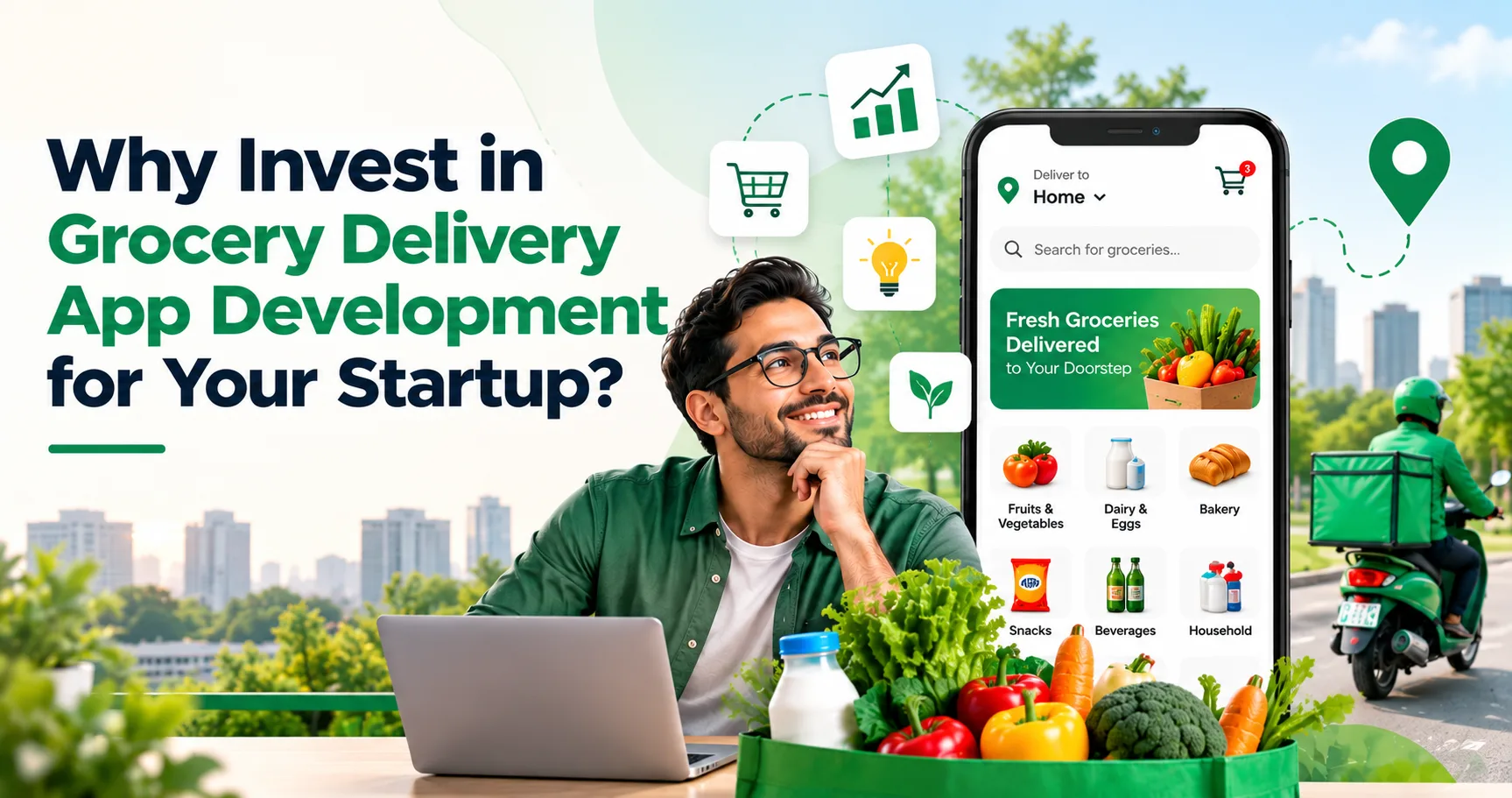
The way people buy groceries has changed significantly in recent years. Customers increasingly prefer ordering daily essentials through mobile apps instead of visiting physical stores for every purchase. From fresh vegetables and fruits to packaged food, dairy products, and household supplies, online grocery shopping has become a convenient option for busy consumers. This shift creates new opportunities for startups and entrepreneurs who want to enter the online grocery market.
For businesses, Grocery Delivery App Development offers an opportunity to build a digital platform that connects customers, grocery stores, and delivery partners. Entrepreneurs can establish their own grocery delivery business, work with local retailers, or develop a multi-vendor marketplace that serves customers across different locations.
However, launching a successful grocery delivery business requires more than simply offering products online. Businesses need a reliable ordering system, efficient delivery operations, convenient payment options, and a customer experience that encourages repeat purchases.
This is where a grocery delivery app solution becomes valuable. It helps businesses organize their operations, manage customer orders, coordinate deliveries, and create a consistent shopping experience. Startups can also consider a white label grocery delivery app to launch their own branded platform without building every feature from scratch.
In this guide, we will explore why grocery delivery platforms are a valuable business opportunity, which features matter most, how these apps generate revenue, and what startups should consider before entering the market.
What Is Grocery Delivery App Development?
Grocery delivery app development is the process of creating a digital platform that allows customers to browse grocery products, place orders, make payments, and receive deliveries at their preferred locations.
These platforms can serve different business models, including individual grocery stores, supermarket chains, local delivery businesses, and multi-vendor marketplaces. Each model has different operational requirements, but the main objective remains the same: make grocery shopping convenient for customers while helping businesses manage their daily activities efficiently.
A typical grocery delivery platform includes three main applications or interfaces.
1. Customer App
The customer app allows users to browse available products, compare options, add items to their carts, and complete purchases. It can also provide order tracking, saved addresses, digital payments, promotional offers, and order history.
A simple shopping experience helps customers find what they need quickly and encourages them to return for future purchases.
2. Delivery Partner App
The delivery partner app helps drivers manage assigned orders, view pickup and delivery locations, and update delivery statuses. Features such as navigation, delivery notifications, and earnings summaries can make delivery operations easier to coordinate.
For startups, an organized delivery process is important because late deliveries and poor communication can affect customer satisfaction.
3. Admin Panel
The admin panel allows business owners to manage customers, grocery stores, products, orders, delivery partners, promotions, and business reports.
A centralized management system helps entrepreneurs monitor daily operations and identify areas that need improvement. For a multi-vendor business, it also helps manage multiple stores through one platform.
Why Should Startups Invest in Grocery Delivery App Development?
Starting a grocery delivery business can be an attractive opportunity for entrepreneurs who want to serve customers through a convenient digital channel. However, success depends on selecting the right market, defining a suitable business model, and building a platform that meets local customer needs.
Here are the main reasons startups should consider this business opportunity.
Entrepreneurs interested in quick-commerce businesses can explore a Blinkit clone app to build a platform focused on fast grocery delivery. This approach can be suitable for startups targeting customers who want daily essentials delivered within a short time.
Before launching, businesses should evaluate local demand, delivery coverage, inventory availability, and their ability to fulfill orders efficiently.
1. Growing Demand for Online Grocery Shopping
Convenience plays an important role in modern shopping decisions. Customers often prefer ordering everyday essentials online when it saves time and reduces the effort involved in visiting stores.
A grocery delivery platform allows customers to shop from home, compare products, and schedule deliveries according to their preferences. This convenience can appeal to working professionals, families, elderly customers, and people with busy schedules.
For startups, the opportunity is not limited to large cities. Smaller cities and underserved neighborhoods may also offer potential when customers have limited access to reliable grocery delivery services.
2. Multiple Business Models to Choose From
One of the advantages of grocery delivery businesses is the flexibility to choose a business model that suits the startup’s goals and resources.
Entrepreneurs can begin with a focused local service and expand as demand grows. They do not necessarily need to establish a large marketplace from the beginning.
Common business models include:
- Single-store delivery: A grocery store offers online ordering and delivers products directly to customers.
- Multi-vendor marketplace: Multiple grocery stores list their products on one platform, allowing customers to shop from different sellers.
- Inventory-based model: The business purchases and manages its own inventory before selling products through the app.
- Hyperlocal delivery: The platform focuses on a particular neighborhood, city, or delivery zone.
- Subscription-based grocery service: Customers receive recurring grocery orders or scheduled deliveries based on their preferences.
Selecting the right model helps startups manage operations more effectively and build a clear growth strategy.
3. Build Your Own Recognizable Brand
A branded grocery delivery app gives entrepreneurs greater control over how customers experience their business.
Instead of depending entirely on third-party marketplaces, startups can establish their own identity through a branded mobile application, website, customer support process, and promotional campaigns.
A white label grocery delivery app can help businesses launch under their own brand while using an existing app solution as the foundation.
Entrepreneurs can customize elements such as the business name, logo, colors, supported services, delivery areas, and promotional offers according to their business requirements.
4. Encourage Repeat Purchases
Groceries are products that customers purchase regularly. Unlike many one-time purchases, items such as milk, bread, vegetables, cooking oil, and household supplies need frequent replenishment.
This creates an opportunity for startups to develop long-term customer relationships.
Features such as previous order history, saved shopping lists, quick reordering, personalized recommendations, and scheduled deliveries can make repeat purchases more convenient.
Businesses can also introduce loyalty programs, referral campaigns, and relevant promotional offers to encourage customers to return.
The goal is to reduce the effort involved in placing another order while maintaining reliable product availability and delivery quality.
5. Expand Into New Locations
A grocery delivery business can begin by serving a small delivery area and expand when its operations become stable.
For example, a startup may initially serve a few neighborhoods through partnerships with local grocery stores. After understanding customer demand and delivery performance, it can gradually introduce additional delivery zones and onboard more retailers.
This approach helps entrepreneurs test their business model before expanding into a larger market.
However, geographic expansion requires careful planning. Businesses need to consider delivery distances, product availability, partner readiness, local regulations, and customer demand in each new area.
A scalable grocery delivery platform can support expansion, but operational capacity must grow alongside the customer base.
Key Features Every Grocery Delivery App Should Have
The features of a grocery delivery platform directly influence its usability, operational efficiency, and customer experience. Startups should prioritize features that solve practical problems instead of adding unnecessary complexity.
1. Easy Registration and Login
Customers should be able to create accounts and access the platform without completing a lengthy registration process.
Common options include mobile number verification, email registration, and supported social login methods.
The objective is to help customers start shopping quickly while protecting account access.
2. Product Search and Categories
A well-organized product catalog helps customers find items without wasting time.
Products can be arranged into categories such as:
- Fruits and vegetables
- Dairy and bakery products
- Packaged food and beverages
- Meat and seafood, where supported
- Personal care products
- Cleaning and household essentials
Search filters, product images, descriptions, unit sizes, and availability information can make product selection easier.
3. Shopping Cart and Checkout
The shopping cart should allow customers to review selected products, change quantities, remove items, and check the order summary before purchasing.
A straightforward checkout process should include delivery address selection, available delivery slots, applicable promotions, and payment options.
Reducing unnecessary steps can help businesses improve the shopping experience and minimize abandoned carts.
4. Multiple Payment Options
Customers may prefer different payment methods depending on their location and shopping habits.
Depending on the target market, a grocery delivery app may support cards, digital wallets, online banking, and cash on delivery where appropriate.
Payment options should be selected according to local customer preferences and applicable regulations.
Clear payment confirmation and digital receipts also help customers understand their transactions.
5. Real-Time Order Tracking
Customers want to know whether their order has been confirmed, prepared, dispatched, and delivered.
Order status updates and delivery tracking help reduce uncertainty and unnecessary customer support requests.
For delivery partners, location information and navigation can support efficient routing. Businesses should ensure that tracking information is accurate and that location data is handled responsibly.
6. Delivery Scheduling
Not every customer needs immediate delivery. Some prefer receiving groceries during a specific time window that fits their daily routine.
Delivery scheduling allows customers to select available slots based on the business’s operational capacity.
This feature can also help startups organize order volumes and coordinate deliveries more efficiently during busy periods.
7. Push Notifications
Notifications can keep customers informed about important order updates, delivery progress, promotional campaigns, and relevant offers.
Businesses should make notifications useful and timely rather than sending excessive messages that may frustrate users.
Personalized communication can help maintain engagement when it is based on customer preferences and appropriate consent.
8. Ratings and Reviews
Customers should be able to share feedback about products, delivery experiences, and overall service quality.
Reviews help other customers make informed decisions while giving business owners useful information about recurring problems.
Startups can use this feedback to improve product selection, delivery reliability, customer support, and partner performance.
9. Order and Inventory Management
Accurate product availability is essential for grocery delivery businesses.
Inventory management features can help businesses track available quantities, update product listings, and identify items that need replenishment.
For multi-vendor platforms, grocery stores should have a convenient way to update their catalogs and manage incoming orders.
Better inventory visibility can reduce cancellations caused by unavailable products and help businesses maintain customer trust.
10. Admin Dashboard and Business Reports
The admin dashboard provides a central place to monitor orders, customers, store partners, delivery activity, promotions, and operational performance.
Reports can help business owners identify popular products, busy delivery periods, frequently used promotions, and areas where order fulfillment needs improvement.
These insights support more informed decisions as the business grows.
How Does a Grocery Delivery App Generate Revenue?
A grocery delivery business can use several revenue streams depending on its business model, customer segment, and relationships with grocery stores.
Startups should select revenue methods that support sustainable operations without making the service unnecessarily expensive for customers.
1. Commission From Grocery Stores
A multi-vendor marketplace can earn a commission on completed orders placed through its platform.
For example, grocery stores may pay an agreed commission in exchange for access to the marketplace’s customers, ordering system, and delivery network.
The commission structure should reflect the services provided, store margins, order volume, and local market conditions.
2. Delivery Fees
Businesses can charge customers a delivery fee based on factors such as distance, delivery speed, order size, or selected delivery slot.
Some platforms may offer free delivery above a minimum order value or during promotional periods.
The important consideration is to balance delivery expenses with customer expectations and the business’s financial sustainability.
3. Subscription Plans
A grocery platform may introduce a membership program that provides benefits such as eligible free deliveries, exclusive offers, or priority delivery slots.
Recurring memberships can create a more predictable revenue stream while encouraging customers to place repeat orders.
However, subscription benefits should be designed around actual usage patterns and delivery capacity.
4. Featured Product Listings
Grocery stores and brands may pay to promote selected products within the app.
For example, a store could promote seasonal products or a brand could feature a new household item in a relevant category.
Sponsored listings should be clearly identified so customers can distinguish promotions from ordinary search results.
5. Advertising Partnerships
Once a platform attracts a relevant customer base, it may offer advertising opportunities to grocery brands, packaged food companies, and other suitable businesses.
Advertising can provide an additional source of revenue, provided that promotional placements do not interfere with the shopping experience.
6. Business Partnerships
Entrepreneurs can explore partnerships with local retailers, specialty food suppliers, and businesses that need regular grocery deliveries.
Depending on the platform’s capabilities, these partnerships may include recurring orders, corporate grocery services, or dedicated delivery arrangements.
A combination of suitable revenue streams can help startups reduce dependence on a single source of income.
What Is a Grocery Delivery App Script, and How Can It Help Startups?
A Grocery Delivery App Script is a pre-developed application solution that provides a foundation for launching a grocery delivery business.
Instead of creating every feature from the beginning, entrepreneurs can use an existing solution that includes essential capabilities for customers, delivery partners, and administrators.
Startups planning to offer a wider range of grocery products can also consider a BigBasket clone app as a reference for building an online grocery shopping platform.
A ready-made solution can be useful for founders who want to focus on business planning, customer acquisition, store partnerships, and operational improvements rather than developing every application component independently.
Depending on the provider, a grocery delivery script may include:
- Customer ordering and account management
- Product catalog and category management
- Shopping cart and checkout
- Order assignment and delivery tracking
- Payment integration
- Store and delivery partner management
- Promotional campaigns and notifications
- Business reports and administrative controls
Before selecting a solution, businesses should verify which features are included, what can be customized, how updates are handled, and whether the platform supports their intended business model.
A ready-made script should not be treated as a complete substitute for business planning. Startups still need to validate demand, establish reliable delivery operations, and provide effective customer support.
White Label Grocery Delivery App vs. Custom Development
Entrepreneurs generally consider two approaches when launching a grocery delivery platform: adopting a white-label solution or developing a custom application.
The right choice depends on the business’s requirements, launch objectives, available resources, and long-term plans.
For entrepreneurs exploring quick-commerce opportunities, an Instamart clone app can serve as a reference model for a grocery delivery business focused on convenience and rapid order fulfillment.
White Label Grocery Delivery App
A white-label solution provides an existing platform that businesses can customize and launch under their own brand.
This approach can be suitable for startups that want to establish a branded service without developing every feature from scratch.
Potential advantages include:
- A faster path to launching an initial product
- Existing essential grocery ordering features
- Brand customization options
- Support for customer, delivery, and administrative workflows
- The ability to focus more on market entry and customer acquisition
The exact capabilities depend on the solution provider. Entrepreneurs should confirm customization options, ownership terms, integrations, and ongoing support before making a decision.
Custom Grocery App Development
Custom development involves creating a platform according to specific business requirements.
It may be suitable for companies with unique workflows, specialized integrations, or requirements that cannot be met by an existing solution.
A custom approach can provide greater control over product behavior and long-term development priorities, but it also requires more planning and coordination.
Which Approach Should a Startup Choose?
For a startup entering an established market with standard grocery delivery requirements, a white-label solution can be a practical starting point.
A business with highly specialized operations or distinctive product requirements may benefit from custom development.
Entrepreneurs should compare both approaches based on functionality, flexibility, ownership, support, scalability, and the ability to meet customer expectations.
The best option is the one that supports the business strategy rather than simply offering the largest number of features.
Steps to Launch a Successful Grocery Delivery Business
Building the app is only one part of launching a grocery delivery business. Startups also need a clear operating model, a defined customer base, and a plan for attracting and retaining customers.
Step 1: Research Your Target Market
Identify the customers you want to serve and understand their grocery shopping habits.
Research existing grocery delivery services, local supermarkets, customer expectations, product availability, and delivery limitations.
Look for unmet needs, such as underserved neighborhoods, specialized grocery categories, convenient delivery slots, or better service for local retailers.
Market research helps entrepreneurs avoid entering a market without a clear reason for customers to choose their service.
Step 2: Select Your Business Model
Decide whether you will operate a single-store service, a multi-vendor marketplace, an inventory-based business, or a hyperlocal delivery platform.
Consider who will manage the inventory, who will fulfill orders, how delivery partners will be organized, and how the business will generate revenue.
A clearly defined model makes it easier to select appropriate app features and establish operational responsibilities.
Step 3: Choose the Right Development Approach
Evaluate whether a ready-made Grocery Delivery App Script, a white-label platform, or custom development best suits your requirements.
Prepare a list of essential features, integration requirements, branding needs, and future expansion plans.
Request a product demonstration and test important workflows before making a final decision.
Step 4: Partner With Grocery Stores and Suppliers
Product availability is central to the success of a grocery delivery service.
Start by identifying reliable stores or suppliers that can provide the products your target customers need.
Agree on product catalog management, stock updates, order preparation, substitutions, returns, and delivery responsibilities.
Reliable supplier relationships help reduce order cancellations and maintain a consistent shopping experience.
Step 5: Establish Delivery Operations
Decide how orders will be delivered and how delivery areas will be managed.
Your approach may involve employed delivery staff, independent delivery partners, store-managed deliveries, or third-party delivery services.
Define delivery schedules, order assignment procedures, customer communication processes, and service standards.
Operational reliability is especially important for groceries because customers may depend on timely deliveries for daily meals and household needs.
Step 6: Test the Platform Before Launch
Before introducing the service to a wider audience, test the complete customer journey.
Verify account registration, product search, cart management, checkout, payment confirmation, order assignment, tracking, notifications, and delivery completion.
Also test how the platform handles unavailable products, cancelled orders, failed payments, and customer complaints.
Resolving these issues before launch can reduce operational problems and improve customer confidence.
Step 7: Promote Your Grocery Delivery App
A new grocery delivery business needs a clear customer acquisition strategy.
Start with a focused delivery area and use channels that reach your intended audience.
Useful promotional activities include:
- Local SEO and location-specific landing pages
- Search engine optimization for grocery delivery searches
- Social media campaigns
- Referral and loyalty programs
- Partnerships with local stores and community businesses
- Email campaigns for customers who have opted in
- Introductory offers for new customers
For B2B grocery platforms, entrepreneurs can also build partnerships with supermarkets, independent retailers, and regional suppliers.
Step 8: Measure Performance and Improve
After launch, track key business metrics to understand whether your platform is meeting customer expectations.
Important metrics include order completion rates, repeat purchase rates, average order value, delivery times, cancellation rates, customer retention, and customer acquisition performance.
Use these insights to identify operational problems and prioritize improvements.
For example, a high cancellation rate may indicate inventory issues, while a low repeat purchase rate may point to problems with product selection, delivery quality, or customer experience.
Regular performance reviews help businesses make informed decisions as they grow.
Conclusion
Grocery delivery app development offers startups and entrepreneurs an opportunity to establish a digital grocery business, serve changing customer needs, and build long-term relationships with shoppers. However, success depends on more than launching an application. Businesses must select the right operating model, partner with reliable grocery suppliers, maintain accurate inventory information, and provide a convenient ordering and delivery experience.
A white-label grocery delivery app can help entrepreneurs enter the market with an established foundation and focus on branding, customer acquisition, and business operations. Choosing the right solution requires careful evaluation of features, customization options, scalability, support, and ownership terms.
Startups should begin with a clearly defined target market, test their business model, and improve their service based on customer feedback and performance data. A focused launch strategy can help businesses identify opportunities before expanding into new locations.
Working with an experienced clone app development company can help entrepreneurs evaluate ready-made solutions and select a platform aligned with their business goals. With the right strategy, reliable technology, and consistent service quality, a grocery delivery business can build a strong foundation for sustainable growth.
Frequently Asked Questions
1. What is grocery delivery app development?
Grocery delivery app development involves creating a digital platform that allows customers to browse grocery products, place orders, make payments, and receive deliveries. It can include customer, delivery partner, and admin applications to manage the complete ordering process.
2. Why should startups invest in grocery delivery app development?
Startups can use grocery delivery platforms to serve customers who prefer convenient online shopping, build their own brands, partner with local retailers, and develop recurring customer relationships. Success depends on market demand, operational efficiency, and customer satisfaction.
3. What features should a grocery delivery app include?
Essential features include customer registration, product search, product categories, shopping carts, checkout, payment options, order tracking, delivery scheduling, notifications, inventory management, and administrative reporting.
4. What is a white label grocery delivery app?
A white label grocery delivery app is an existing application solution that a business can customize and launch under its own brand. Depending on the provider, it may include customer ordering, delivery management, store management, and administrative features.
5. How can a startup generate revenue from a grocery delivery app?
A grocery delivery business can generate revenue through store commissions, delivery fees, subscriptions, sponsored product listings, advertising partnerships, and business delivery arrangements. The suitable combination depends on the business model, customer demand, and operating costs.


Leave a Reply