
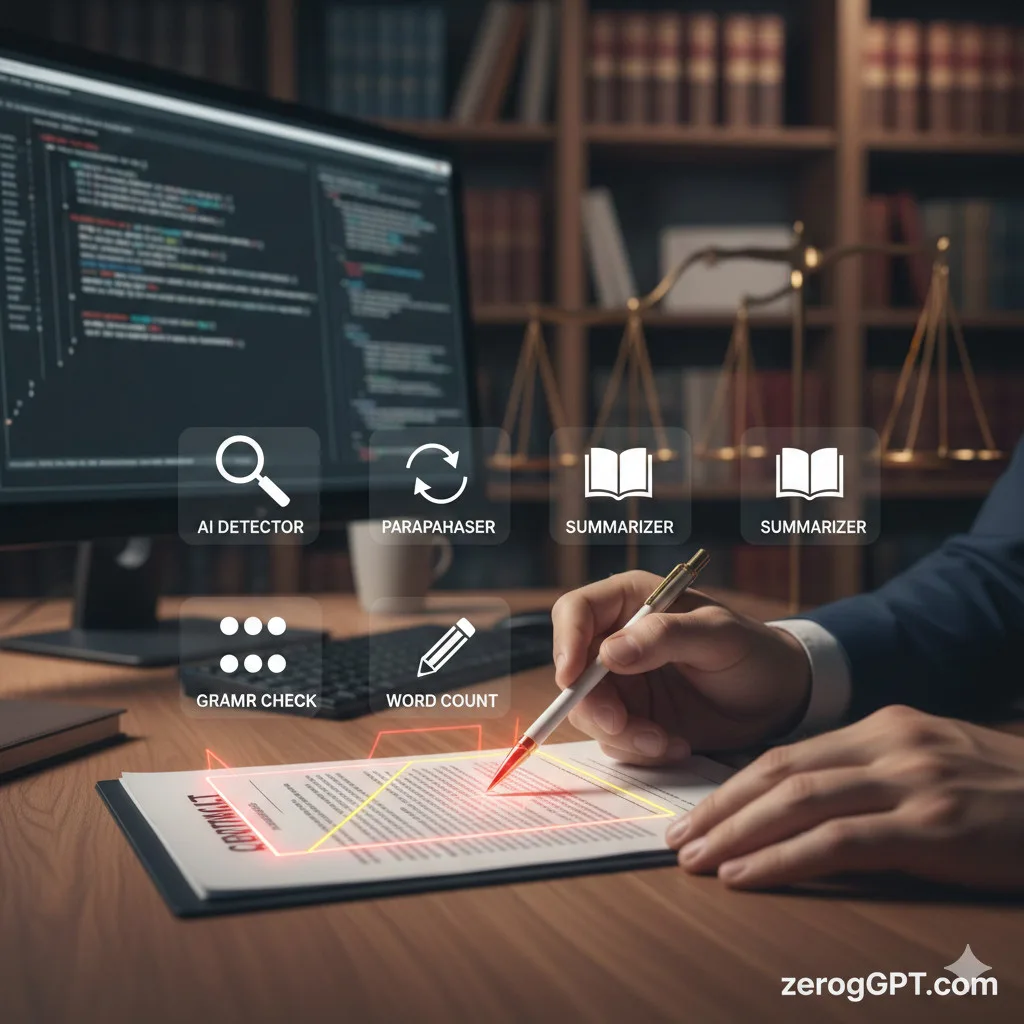
Legal teams handle paperwork that must be accurate, clear, and risk-free. The smallest change in contract language can alter its meaning, lead to disputes, or expose compliance issues. In many offices, teams now add one more layer of protection to their drafting process – an AI detector tool. The goal is straightforward here. Detect machine-written text before it reaches a client or a board.
Contract reviews often move quickly and involve multiple versions. A junior assistant may rewrite a clause using a paraphrasing tool without thinking about the long-term consequences. Detection software helps identify content that looks machine-produced or partially automated. A flagged sentence invites a second look, and that second look usually saves time later during negotiations.
Why detection matters in legal work
Contracts hold weight. These documents outline terms, responsibilities, deadlines, payment triggers, penalties, and dispute resolution. Machine-generated writing sometimes sounds clean, but tone may lack the balance or precision required in a legal context. Many AI detector systems highlight sections with repetitive structure, flat pacing, or predictable transition patterns. Lawyers then review the language and rewrite it with clarity.
Some legal teams fear that a flagged paragraph means low quality. That assumption is incorrect. Detection only shows probability, not intent or meaning. A flagged line is simply a signal to edit with more attention. Most teams find that one round of revision fixes the issue.
How legal teams rewrite flagged sections
Good rewriting begins with understanding. A fast method many professionals use starts by summarizing the clause. A summarizer tool breaks large paragraphs into core ideas. Writers then rebuild sentences around those ideas instead of replacing terms line by line. This step produces a natural tone and avoids robotic patterns.
Grammar correction comes after rewriting. A grammar checker catches slip-ups, tense issues, missing commas, and unclear phrasing. Contract language must be clean and steady across pages. Grammar control protects readability.
Sometimes contract drafts grow longer as versions expand. A word counter helps manage length in policy pages, supply agreements, and compliance reports. Teams use this tool when they need a specific length range for disclosure or filing.
Workflow that suits legal teams
Many firms follow a staged method to make detection smooth. The first stage happens during early drafting. A legal intern or associate writes base content. The next stage involves AI scanning. Detection highlights potential machine-like phrases. Editors rewrite areas that need attention. Grammar checks come after revision. The final review passes through senior partners before sealing and sending.
Add one more step for contracts that include data privacy or confidential business terms. Full documents should never be uploaded to public tools without clearance. Internal scanning tools work better for private negotiations. Redaction also helps when scanning online systems is required.
Mistakes legal teams often notice during review
One common mistake is synonym-based rewriting. This type of rewrite changes terms but keeps the structure. Another mistake is copying and pasting chunks from previous agreements without reforming the sentence rhythm. Contract style must stay human, steady, and confident. AI detector support helps teams prevent mechanical tone from slipping through.
Professionals sometimes struggle with repetitive openings. Changing sentence structure during rewrite improves quality. A clause may start with an obligation, a condition, or a timeline, depending on context. Variation keeps reading natural.
Final thoughts
Legal departments that work with contracts every week benefit from AI detection tools because these tools act as a screening method rather than a replacement for human review. A paraphrasing tool may help generate drafts faster, but manual editing gives accuracy. A summarizer makes dense material easier to reshape. A grammar checker cleans the final draft. A word counter controls the length of compliance pages. Each step contributes to safer communication in contracts and agreements.





Leave a Reply