
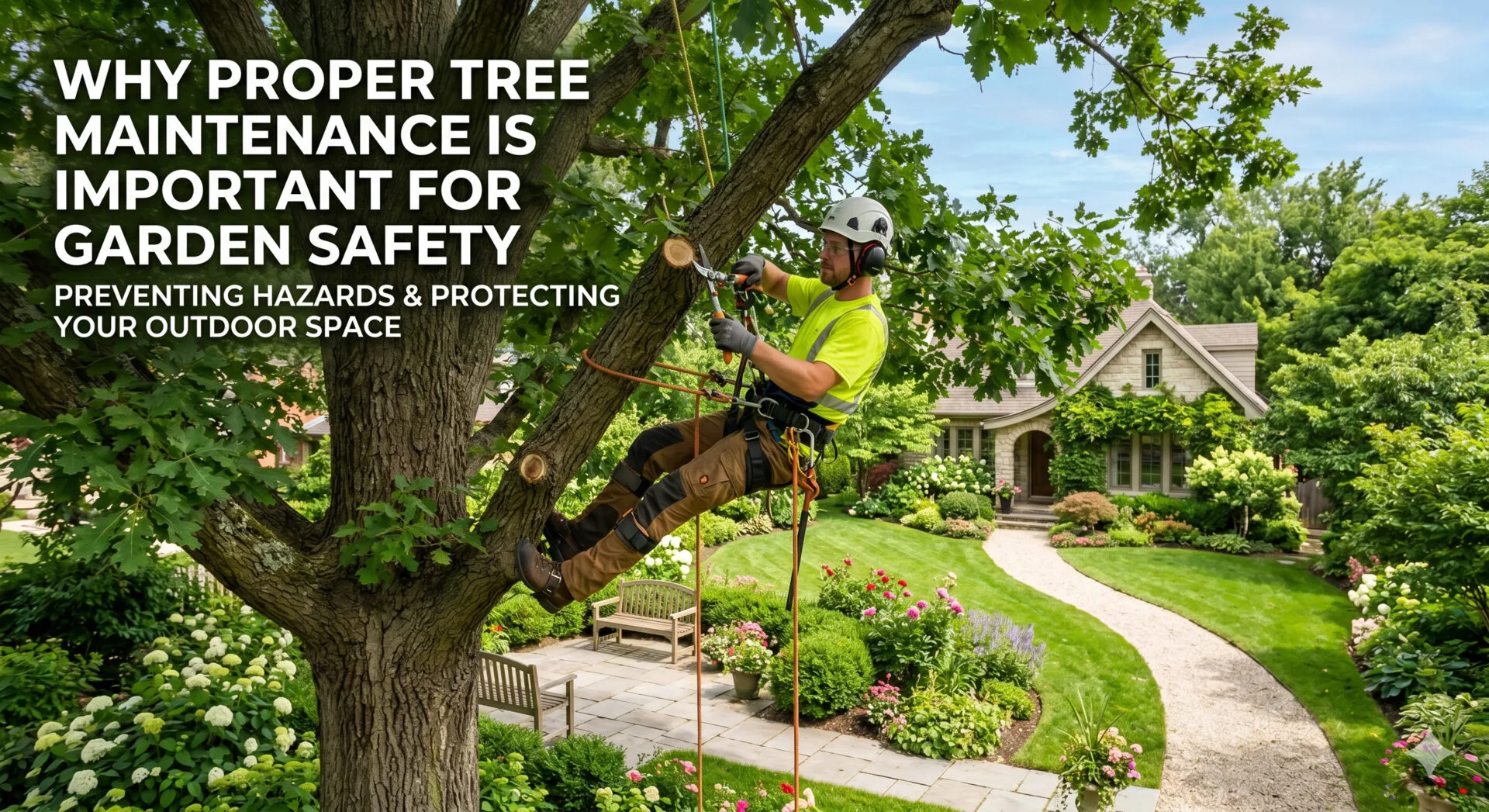
Trees can completely transform the appearance of a garden. They provide shade, privacy, structure, and natural beauty throughout the year, often becoming some of the most valued features within outdoor spaces. Yet while healthy trees can improve a property significantly, neglected maintenance can sometimes create serious safety concerns that many homeowners underestimate.
Because trees grow gradually over long periods, problems are not always immediately obvious. Branches may weaken slowly, growth patterns can become unbalanced, and hidden disease may develop without attracting much attention at first. Over time, however, small issues can evolve into significant hazards, particularly during periods of strong wind, heavy rain, or winter storms.
One of the most common safety risks involves dead or damaged branches. These limbs may remain attached to the tree for months or even years while gradually weakening further. During calm weather, they can appear stable, but high winds or additional weight from rain and snow may suddenly cause them to fall. Even relatively small branches can cause injury or damage vehicles, fences, greenhouses, sheds, or nearby property if they come down unexpectedly.
Overgrown trees can also create problems by extending too closely towards homes, power lines, footpaths, or roads. Branches rubbing against roofs, gutters, or windows can cause gradual structural damage over time, while trees growing near public spaces may create risks for pedestrians or vehicles if left unmanaged.
Visibility is another factor that homeowners often overlook. Dense or poorly maintained trees can obstruct pathways, reduce natural light, or block visibility around driveways and roads. In some cases, excessive growth may even conceal hazards elsewhere within the garden itself.
Disease can quietly increase safety risks as well. Fungal infections, internal decay, and pest damage may weaken branches or entire sections of a tree long before obvious symptoms appear externally. A tree that still looks relatively healthy on the outside may already have significant structural weakness internally. This is one reason regular inspection and maintenance are so important, especially for larger or older trees.
Seasonal weather changes place additional pressure on neglected trees. Autumn and winter storms frequently expose weaknesses that have developed slowly throughout the year. Branches carrying excessive weight or affected by disease are far more likely to fail during severe weather conditions. Preventative maintenance before storm seasons can therefore significantly reduce the risk of sudden damage.
Pruning plays a major role in improving both safety and long-term tree health. Removing dead, damaged, crossing, or overcrowded branches helps reduce stress on the tree while encouraging stronger and more balanced growth. Proper pruning also improves airflow and light penetration, which can reduce the likelihood of certain diseases developing.
Importantly, pruning is not simply about appearance. Many people assume tree maintenance is purely cosmetic, but in reality, it often has significant structural and safety benefits. A well-maintained tree is generally better equipped to withstand harsh weather conditions and less likely to develop unstable growth patterns.
Young trees especially benefit from early maintenance because shaping healthy growth structures while the tree is still developing can prevent larger problems later. Mature trees, meanwhile, may require more careful monitoring because age naturally increases the risk of branch weakness and internal decay.
The equipment used during maintenance is equally important. Attempting large-scale pruning without suitable tools or experience can create serious safety risks. Working at height, using cutting equipment incorrectly, or removing heavy branches without proper control can lead to accidents very quickly.
This is one reason many homeowners invest in specialist garden equipment or seek professional assistance for larger maintenance tasks. Companies such as Garden Machinery Direct have highlighted the growing demand for reliable equipment designed to support safer and more effective garden maintenance.
Regular maintenance can also improve the wider health of a garden ecosystem. Healthier trees generally support stronger plant growth around them by allowing more balanced access to sunlight, moisture, and airflow. Removing problematic branches can therefore benefit surrounding lawns, plants, and shrubs as well.
Interestingly, many tree-related accidents occur not because a tree was obviously dangerous, but because warning signs were ignored or unnoticed for too long. Small cracks, leaning growth, dying branches, or unusual fungal growth can all indicate deeper structural issues developing gradually over time.
There is also a financial side to preventative maintenance. Addressing minor problems early is often significantly cheaper than dealing with major storm damage, emergency removals, or repairs after falling branches cause property damage. Preventative pruning and inspections, therefore, make practical sense both from a safety and cost perspective.
As gardens increasingly become extensions of living spaces, outdoor safety has become more important for many homeowners. Patios, outdoor dining areas, children’s play spaces, and garden offices all increase the amount of time people spend near trees and larger plants, making regular maintenance even more important than before.
Trees remain some of the most valuable features a garden can have, but their size and longevity mean they require ongoing attention rather than being left entirely unmanaged. Proper tree care helps preserve not only appearance and growth, but also the safety of the surrounding environment for years to come.





Leave a Reply