
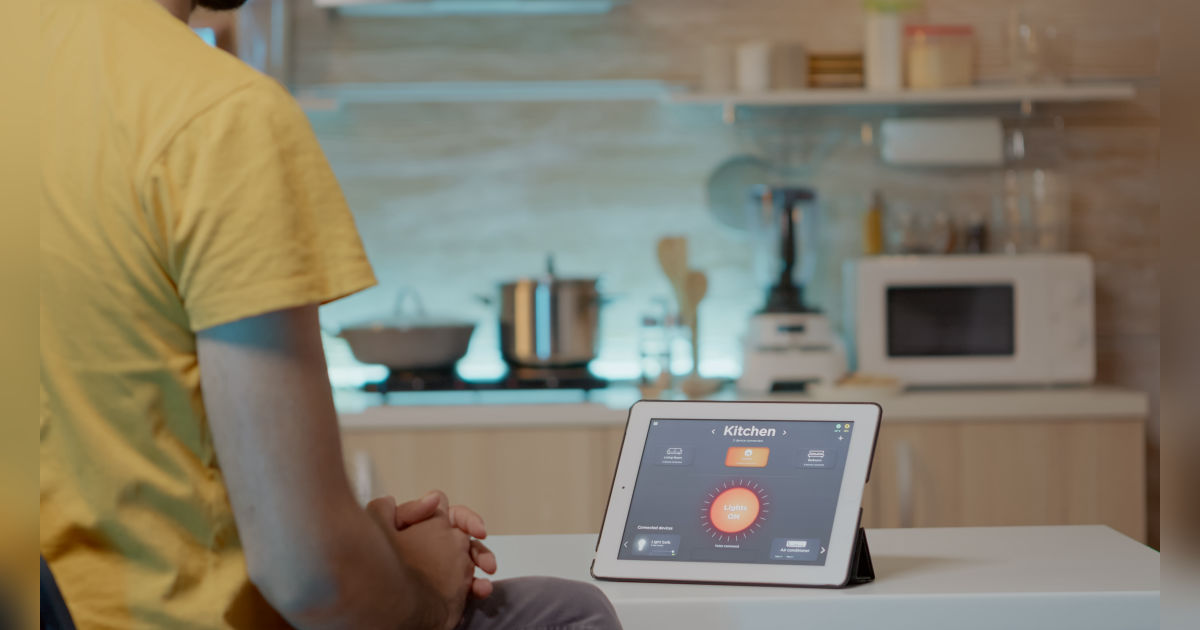
The concept of a connected home evolved from science fiction houses that could think and learn, and even meet the needs of their human occupants automatically. Today, those connected home devices are everywhere, quietly transforming the way we live, work, and secure our space. From smart lighting and thermostats to security systems, this device (imagine a baby monitor that helps parents sleep better) is made through a fascinating mix of hardware engineering, software development, user psychology, and data intelligence.
But the question is, how are these connected home devices actually created? What are the actions undertaken to turn an idea into a reliable, safe , and smart product inside millions of homes? Let’s follow the work of the entire development team, all the way from concept to consumer-ready device.
Understanding the Problem and User Needs
All connected-home gadgets start as a problem waiting for a solution. Development teams begin by pinpointing real-world pain points , not just technological possibilities.
For example:
- Homeowners are interested in ways to lower energy bills.
- Real-time and on the go, parents demand their baby’s safety, watching live via a baby monitor.
- Users want convenience without complexity.
- Families seek security and at the same time valueprivacy.
Product researchers do surveys, interviews, usability tests, and market research. They look at how people are interacting with the smart devices that already exist, what people are frustrated by, and what features or capabilities are missing.
Manufacturers of smart devices prefer user-oriented design at this stage, because no matter how technically advanced a device is, an error-prone device can not be sold in the market.
2. Defining the Product Vision and Use Cases
After the need has been identified and clarified, we will shape the product vision. This includes deciding:
- What will the device do?
- Who is it for?
- How could it fit into everyday life?
- What sets the competitorsback?
The developer provides use cases, which are real-life examples of how this device should be used. For example:
- A parent is viewing a feed from the baby monitor on the other side of town during work hours.
- A homeowner who is alerted when there is motion.
- Automatic light changes with the time of day.
- This phase also includes determining whether the device will operate on its own or as one cog in a larger, intelligent ecosystem such as Google Home, Alexa, and Apple HomeKit.
3. Hardware Design and Component Selection
The hardware is the physical basis of every connected home device. Engineers need to be cautious in picking up the components that would survive on performance, cost, size, and power efficiency.
Key hardware components typically include:
- Sensors: Motion, Temperature, Humidity, Sound camera etc.
- Microcontrollers or processors.
- Wireless interfaces. (Wi-Fi, Bluetooth, Zigbee, Thread)
- Power systems.(battery or wired)
- Cameras and microphones. (where applicable)
For something like a baby monitor, the accuracy of the hardware is super important. Camera resolution, low-light visibility capabilities, sound meters, and high-latency streaming will all have an affect user confidence and safety.
But smart home product manufacturers prototype many different versions of hardware before they arrive at a design that would be durable, compliant and manufacturable.
4. Embedded Software and Firmware Development
Once hardware is realized, integrated software allows a device to be more than still-born. The firmware also defines how a device perceives its environment and meets its users’ needs.
This layer handles:
- Sensor data processing.
- Device booting and updates.
- Power management.
- Network connectivity.
- Error handling.
Firmware must be lightweight, efficient, and extremely stable. A bug in this layer can render the entire device unusable.
Over-the-air (OTA) update capability is also built at this stage, allowing devices to receive improvements and security patches long after installation, an essential requirement in modern connected homes.
5. Connectivity and Network Integration
Connectivity is the backbone of any connected home device. Developers must ensure that devices communicate reliably across various home network conditions.
This involves:
- Choosing communication protocols. (Wi-Fi, BLE, Zigbee, Matter)
- Managing bandwidth usage.
- Handling dropped connections.
Firmware needs to be small, effective, and rock solid. A bug in this plane can disable the full device.
Over-the-air (OTA) update support is baked in at this point, which means devices will be able to take advantage of enhancements and security fixes long after they’re installed: a must-have feature for today’s connected homes.
6. Cloud Infrastructure and Backend Development
Most smart home devices rely on cloud-based services to be intelligent. The brain in the cloud is of the hidden variety.
Cloud systems handle:
- Data storage.
- Device authentication.
- User account management.
- Analytics and reporting.
- AI-based insights.
A baby monitor, for example, could store clips of short videos in the cloud out of reach from hackers or use audio-pattern recognition to decide if a baby is upset. Smart thermostats are also able to learn from this pattern to optimize energy conservation.
Backend developers want scalability, reliability, and data security so they can hold thousands or millions of devices online.
7. Mobile App and User Interface Design
At the end of the day, a connected home device is only as good as the interface controlling it. Mobile applications are the most prominent point of contact for users.
App development focuses on:
- Clean, intuitive UI.
- Easy device setup.
- Real-time alerts and notifications.
- Custom automation rules.
- Accessibility for all users.
Designers collaborate with developers to smooth over this. Whether a user is groggily glancing at a baby monitor in the middle of the night or checking in on home lighting when they’re far away, the experience needs to be speedy and clear and lack all built-in stress.
User feedback loops and iterations are very important here, where small changes in the interface can change satisfaction and adoption significantly.
8. Security and Privacy by Design
It’s not just about security as an afterthought – it is embedded in every aspect of the development of a connected home device.
Key security practices include:
- End-to-end encryption.
- Secure device authentication.
- Regular security updates.
- Data anonymization.
- Compliance with global privacy laws.
This is especially important for devices that store private data, such as cameras and baby monitors. All it takes is one vulnerability to destroy brand trust overnight.
Reputable manufacturers of smart home devices spend a lot on penetration testing, third-party audits, and make their privacy policies clear.
9. Testing, Quality Assurance, and Compliance
Before being launched to market, these connected home devices are put through extensive testing that guarantees the safety and reliability of the product.
Testing includes:
- Functional testing.
- Stress and load testing.
- Environmental testing. (heat, cold, humidity)
- Network reliability testing.
- Security testing.
Devices must pass international standards like FCC, CE and RoHS. There are additional safety standards for products meant to be used with children, such as a baby monitor.
This process may take months, but is crucial to avoid recalls, unhappy customers and possible legal difficulties.
10. Manufacturing and Supply Chain Coordination
After testing, the devices are moved into production. This calls for careful collaboration between engineers, manufacturers and logistics.
Key considerations include:
- Component sourcing.
- Manufacturing scalability.
- Quality control at factories.
- Packaging and shipping.
- Cost optimization.
The manufacturers of Smart Home products also need to consider future production runs, firmware updates, and long-term support for a product to have a good life span.
11. Post-Launch Support and Continuous Improvement
Development doesn’t stop once the product arrives on the market. In so many ways, it’s only getting started.
Post-launch activities include:
- Monitoring performance data.
- Fixing bugs via OTA updates.
- Adding new features.
- Responding to user feedback.
- Improving compatibility with new platforms.
Smart home gadget has to keep up with user demands and technology trends. It’s making improvements that differentiates successful product from a bloopered one.
The Future of Connected Home Device Development
With the advance of AI, edge computing, and interoperability standards, connected home devices will be made a lot more intuitive, self-sufficient and human-centered.
Future trends include:
- Automated Set-Up Free Learned Devices.
- Improved interoperability across brands.
- Greater emphasis on privacy-first design.
- Intelligent other monitoring equipment, more intelligent baby monitor features.
- Energy-efficient and sustainable hardware.
Innovation will still integrate engineering precision with empathy and we’re going to design more than smart devices, but also tremendous experiences.
Final Thoughts
Smart home products are the product of truly multidisciplinary work: blending engineering, design, data science and understanding of human behavior. From initial concept to the final product, we take the time to craft everything carefully so that your site is reliable, secure, and easy to use.
From a plain-vanilla smart switch to an upscale baby monitor, these are the devices that help homes think for themselves in good ways and bad.“These are all combo gadgets where our houses,’ families’, lives, and stuff have some kind of digital overlay,” Mr. Koenig says. Meanwhile, new smart home product makers are continually emerging, and as they do, our homes will only grow more connected, intelligent, and responsive.




Leave a Reply