
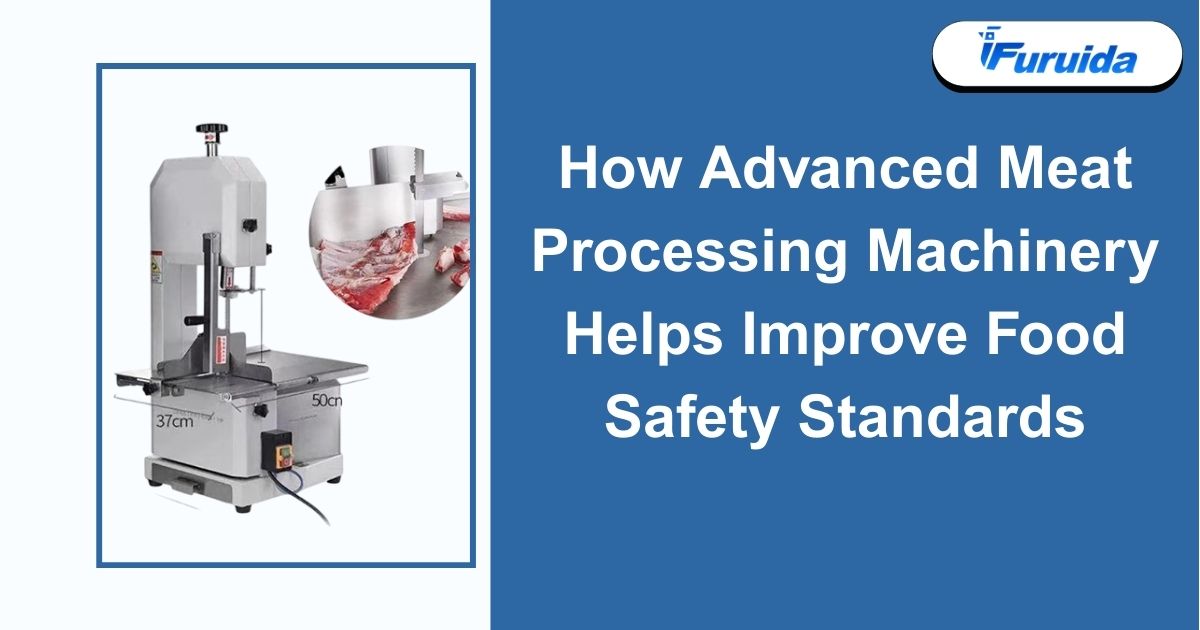
Food safety is a big issue in the meat industry. The quality of meat may be compromised by contamination, human error, and outdated equipment, leading consumers to lose confidence.
A Meat processing machine is a high-tech, modern machine that assists companies in rectifying these issues. They are more accurate, automated, and checked in real time. Nowadays, purchasing good machines not only means faster but also safer meat.
Understanding Food Safety in the Meat Industry
In the meat process, food safety is the prevention of infection by germs, chemicals, or foreign bodies.
Common risks include:
- Biological: Salmonella and E. coli bacteria.
- Chemical: Cleaning chemicals or preservatives.
- Physical: Bones, metallic objects, or other external objects.
As consumers are more aware and as rules become progressively stricter, it is more important now than ever before that meat be kept clean.
Role of Technology in Modern Meat Processing
The processing of meat has been altered by technology. Traditional methods relied heavily on human labor, which led to more errors and higher risks of contamination.
The automated machines today offer:
- Regular and accurate slicing.
- Reduced contact of humans with raw meat.
- On-site cleanliness and temperature checks.
Some companies, such as Furuida Equipment, provide powerful machines that preserve the meat, maintaining its safety and simplifying and accelerating the process.
Key Features of Advanced Meat Processing Machinery that Enhance Food Safety
Precision Cutting and Handling
Modern machines provide highly accurate cutting of meat, and this minimizes the possibility of mistakes that may lead to contamination. They also make sure that all meat is of equal quality, and it is also safer for the customers.
Automated Cleaning and Sanitation
Cleaning of machines is now done through mechanisms such as CIP (Clean-in-Place). This has the ability to clean all the parts of the machine without dismantling it, and this minimizes human errors and saves time.
Temperature Control and Monitoring
The temperature during processing and storage can be checked and controlled by machines. This prevents the growth of bacteria and preserves meat. It is also used to assist companies in complying with safety regulations such as HACCP.
Traceability and Smart Sensors
Certain machines keep track of every consignment of meat. In case there is an issue, the system prompts staff members. This will ensure that unsafe meat does not reach consumers and quickly identify the source of any issues.
If you’re exploring different machinery options, modern meat processing machines a variety of equipment that combines precision, hygiene, and efficiency
Compliance with Global Food Safety Standards
The implementation of modern machines assists companies in fulfilling the safety regulations established by agencies such as the FDA, USDA, and ISO. They are able to monitor temperature, cleanliness, and production automatically, thus making meat safer.
Batches of meat can also be easily checked and tracked with the help of these machines. Cleaning systems ensure the maintenance of equipment with little human labor. These machines are useful in assisting businesses to comply with safety regulations, store products, and maintain production processes.
Real-World Benefits of Advanced Machinery on Food Safety
It pays off to invest in modern machines, and the results are fast:
- Minimal human interaction eliminates chances of contamination.
- Controlled temperature helps to keep meat fresh and diminishes wastage.
- Processing is uniform to ensure consistent quality.
- There is quicker production, and safety is not compromised.
- Customers believe in high quality and secure products.
Modern equipment frequently results in a combination of efficiency and safety improvement in companies.
Challenges and Considerations
Advanced machines come with certain challenges. One of the main concerns is the high initial cost. However, this cost can be recovered over time because these machines improve efficiency, reduce the risk of contamination, and help deliver better product quality.
Proper maintenance is also essential to keep the machines in good working condition and ensure safe operation. Staff must be well-trained, so they understand how to use the equipment correctly and handle minor issues. Even the best machines cannot perform well without proper training.
Companies should also carefully plan how new machines are added to their existing workflow. A clear integration strategy helps prevent disruptions and ensures smooth day-to-day operations.
Despite these challenges, the investment is often worthwhile due to improved safety, compliance with industry standards, and increased efficiency.
Future Trends in Meat Processing and Food Safety
The technological revolution is transforming the meat industry. AI and IoT technologies are sensitive to pollution and contamination at an initial stage, and robots do not touch meat, making it safer and purer.
The new machines are also quite energy-saving and maintain hygiene and quality. Modern technology can ensure that businesses are safe, efficient, and future-ready.
Conclusion
The use of modern meat processing machines is crucial for ensuring food safety. These machines help reduce human contact with meat, which lowers the risk of contamination. They are designed for easy cleaning, preventing the build-up of bacteria and germs during processing.
Another important advantage is accuracy. Machines slice, grind, and cut meat consistently, which reduces errors and ensures each product meets quality and safety standards. Automation also increases production speed, allowing businesses to process more meat in less time while maintaining hygiene.
Furuida Equipment provides high-quality meat processing machines that help businesses improve safety and efficiency. Their equipment is built to meet industry and food safety regulations. By upgrading to modern machines, companies can protect consumers, improve product quality, and run their operations more smoothly.
FAQs
Q. What are the advantages of meat processing machines in enhancing food safety?
They minimize human errors, cross-contamination, and standardized cleaning, slicing, and supervision.
Q. What is HACCP and why do we need it?
One of the modes of locating and managing risks in food production is HACCP (Hazard Analysis Critical Control Point). The use of high-tech machines assists in adhering to HACCP regulations.
Q. Is it worth the money to have advanced meat processing machines?
Yes, although they are initially more expensive, they minimize contamination, reduce labor costs, and are more efficient in the long run.
Q. What are the latest technologies of meat processing?
The most current AI, IoT sensors, robots, and automatic cleaning systems are beneficial to food safety and efficiency.





Leave a Reply