
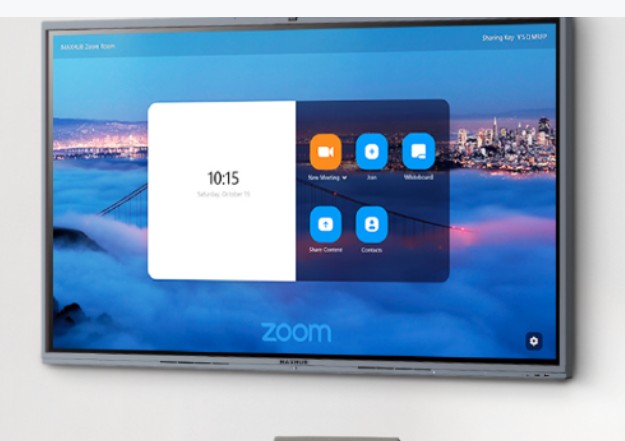
Transforming Collaboration in a Digital-First World
We are witnessing a fundamental shift in how teams communicate, share ideas, and make decisions. Traditional presentation tools are no longer sufficient for dynamic work environments that demand speed, clarity, and interaction. Collaboration displays have emerged as a central technology that brings people, content, and ideas together on a single intelligent platform. These advanced displays are not just screens; they are interactive ecosystems designed to improve productivity, engagement, and real-time collaboration across organizations.
As businesses, educational institutions, and hybrid workplaces evolve, collaboration displays are becoming an essential part of modern infrastructure. They enable seamless teamwork, whether participants are in the same room or joining remotely.
What Makes Collaboration Displays a Strategic Advantage
A collaboration display combines touch interaction, high-resolution visuals, and integrated software support to create an intuitive shared workspace. Unlike conventional displays, these solutions allow multiple users to interact simultaneously, annotate content, and control applications directly from the screen.
We see organizations adopting collaboration displays because they reduce friction in meetings and discussions. Content is no longer static. Ideas can be edited live, visualized clearly, and saved instantly for future reference. This ability to move from discussion to action without delay is what sets collaboration displays apart.
Interactive Technology That Enhances Engagement
Engagement is one of the most critical factors in effective collaboration. Passive viewing often leads to disengaged participants and unproductive sessions. Collaboration displays change in this dynamic by encouraging active involvement.
With multi-touch functionality, users can write, draw, zoom, and manipulate content naturally. This tactile interaction mirrors the experience of using traditional whiteboards while adding digital flexibility. Whether it is brainstorming strategies, reviewing designs, or analyzing data, interaction keeps participants focused and involved.
The result is clearer communication and stronger alignment among teams.
Seamless Integration with Digital Tools and Platforms
Modern collaboration displays are designed to integrate smoothly with commonly used digital tools. Presentations, documents, spreadsheets, and cloud-based platforms can be accessed and displayed instantly. This eliminates the need to switch between devices or interrupt workflows.
We value collaboration displays because they support a wide range of operating systems and applications. Users can connect laptops, tablets, or mobile devices wirelessly, enabling instant screen sharing. This flexibility ensures that meetings remain efficient and inclusive, regardless of the participants’ technology preferences.
Supporting Hybrid and Remote Collaboration
Hybrid work models have become a permanent reality. Teams are no longer confined to a single location, yet collaboration must remain seamless. Collaboration displays play a critical role in bridging the gap between in-room and remote participants.
By integrating video conferencing, screen sharing, and annotation tools, collaboration displays create an equal experience for everyone involved. Remote participants can view the content clearly, contribute ideas, and interact in real-time. This level of inclusion strengthens teamwork and ensures that distance does not limit contribution.
Improving Decision-Making Through Visual Clarity
Clear visuals lead to better understanding. Collaboration displays offer high-definition resolution, ensuring that charts, diagrams, and presentations are displayed with precision. Complex information becomes easier to interpret when presented visually on a large, interactive screen.
We rely on collaboration displays to support data-driven discussions. Teams can highlight trends, compare figures, and make adjustments instantly. This visual clarity reduces misunderstandings and accelerates decision-making processes.
Driving Productivity in Corporate Environments
In corporate settings, time is a valuable resource. Meetings that lack structure or clarity can slow progress and waste effort. Collaboration displays streamlined communication by providing a single platform for discussion, documentation, and decision-making.
Ideas captured during meetings can be saved, shared, and revisited later. This continuity ensures that progress does not end when the meeting concludes. Teams can pick up exactly where they left off, improving accountability and follow-through.
By reducing manual tasks and improving efficiency, collaboration displays contribute directly to higher productivity.
Enhancing Learning and Knowledge Sharing
Beyond corporate use, collaboration displays are transforming learning environments. Interactive lessons encourage participation and help learners grasp complex concepts more easily. Visual explanations, real-time annotations, and collaborative problem-solving create a richer educational experience.
We see collaboration displays supporting diverse learning styles. Visual learners benefit from diagrams and videos, while hands-on learners engage through interaction. This inclusive approach improves knowledge retention and overall learning outcomes.
A Scalable Solution for Growing Organizations
One of the strongest advantages of collaboration displays is scalability. As organizations grow, their communication needs become more complex. Collaboration displays adapt easily to different room sizes, team structures, and use cases.
From small meeting rooms to large conference halls, these displays offer consistent performance and user experience. Software updates and cloud integration ensure that the technology remains relevant as needs evolve. This scalability makes collaboration displays a long-term investment rather than a short-term solution.
Security and Reliability for Professional Use
In professional environments, data security and system reliability are essential. Collaboration displays are built with enterprise-grade security features to protect sensitive information. Controlled access, secure connections, and system management tools ensure safe operation.
We trust collaboration displays because they are designed for continuous use. Durable hardware and stable software performance make them suitable for high-demand environments where reliability cannot be compromised.
The Role of Collaboration Displays in Digital Transformation
Digital transformation is not just about adopting new tools; it is about improving how people work together. Collaboration displays support this transformation by aligning technology with human interaction.
They simplify complex processes, encourage creativity, and enable faster communication. As organizations seek smarter ways to collaborate, these displays become a central part of their digital strategy.
Why Collaboration Displays Are a Long-Term Investment
Investing in collaboration displays is an investment in people and processes. These solutions reduce operational friction, enhance engagement, and support modern work models. Over time, the benefits extend beyond meetings into daily workflows and organizational culture.
We view collaboration displays as a foundation for future-ready communication. They empower teams to work smarter, collaborate effectively, and achieve better outcomes in an increasingly connected world.
Conclusion: Shaping the Future of Collaboration
Collaboration displays are redefining how ideas are shared and decisions are made. By combining interactive technology, visual clarity, and seamless connectivity, they create environments where collaboration thrives.
As workplaces and learning spaces continue to evolve, collaboration displays will remain a key driver of productivity, engagement, and innovation. Organizations that embrace this technology position themselves to succeed in a world where effective collaboration is not optional—it is essential.




Leave a Reply