

Introduction: Why connecting multiple game providers matters
Picture this: it’s June 1, 2025, and your online casino platform has 50 game titles from one provider. Then you bring on ten more providers. By October 31, you’re managing 3000+ games from 200 providers. That’s exciting, but chaotic. In fact, as of 2024, many operators reported integrating more than 120 providers each, juggling contracts, connections, updates, and player balances. The reason you want to connect multiple game providers is simple: variety drives engagement, fresh titles keep players on board, and wider offers reduce churn. One single unified API connection can move you from “five connectors, five dashboards, five contract terms” to “one neat connection, one dashboard, one contract term”. That matters because players expect new content fast (for example, a live dealer title launched on July 14, 2023, might still be new in certain markets by March 2026). So let’s dive into how to do this smartly.
What is a “Single Casino API”
In plain terms, a “Single Casino API” is a unified interface that a casino operator uses to connect to multiple game providers simultaneously. Instead of separate API integrations for each studio (for example, Provider A, B, and C, each with its own setup), you get one connection with a Casino API Integration company that gives you access to a catalog of providers and their titles. For example, solutions can provide access to 250+ providers and 10,000+ games via one API. Similarly, you can get access to 12,000+ games from 100+ suppliers via a single interface. The essence: you integrate once, manage centrally, and update many. From an operator’s point of view, you also get fewer headaches, more speed, and easier scaling.
The challenge of multiple providers: pain points & legacy stack
Imagine your stack in January 2019: you have three providers, each with its own API version (v1, v2, v3), different authentication, different data models, and different update schedules. You need to build adapter layers, track which provider changed their schema on Feb 12, 2019, April 20, 2021, and July 9, 2022. Multiply that by 50 providers, and you get tangled. Operators have cited these common issues:
- Contract overload: each provider demands a separate contract, with its own renewal date and terms.
- Technical complexity: separate integrations, each with separate error-handling, logging, and support.
- Maintenance burden: each time a provider pushes a new game, your side must test and verify.
- Reporting inconsistency: different providers use different event schemas, making aggregating player behaviour tricky.
- Time to market delays: launching a new provider might take 4–6 weeks on average; some report 3–12 weeks. With a single API, this might drop to 1–2 weeks.
By late 2023, many operators found that their infrastructure spent almost 30% of development time just dealing with provider-integration tasks. That’s wasted when you could be doing marketing or player-experience work.
Key benefits of a unified API approach
Switching to a single API aggregator gives you a bunch of good things. Let’s list them with dates, numbers, and examples:
- Faster time-to-market: Many aggregator solutions claim integration in 3–7 days and launch in under 2 weeks.
- Bigger game catalogue: You can access 10,000+ games from 250+ providers or 28,000+ games from 270+ providers through one API.
- Lower technical overhead: Instead of managing N integrations, you manage one. Maintenance, updates, documentation—all in one place.
- Simplified reporting & analytics: Standardised events enable you to gather data more easily on player behaviour across games and providers.
- Better player retention: With more titles, live dealer content, table games, and slots, you keep players engaged.
- Scalability: As of June 2025, companies can add new providers by flipping a switch rather than re-coding connectors.
- Competitive edge: Offering a library of, say, 15,000 games (vs competitor with 2,000 games) gives a marketing edge.
Step-by-step process of integration (from planning through go-live)
Okay, here comes your practical roadmap. Let’s imagine you’re launching this on March 15, 2026. Here’s how it might go:
Step 1 – Scoping & planning (March 15–23, 2026)
Define business goals: e.g., increase game variety by 300% by September; reduce integration time from 6 weeks to 2 weeks. Choose which catalogue size you want (e.g., 12,000 games from 100 providers). Decide budget (for example USD $50K integration + licensing).
Step 2 – Choose the aggregator / single API partner (March 24–31, 2026)
Evaluate vendors: compare offerings, check support, documentation quality, jurisdictions, regulatory compliance, and average integration times (3–7 days claimed). Then select.
Step 3 – Contracting & compliance (April 1–April 14, 2026)
Sign the master agreement with the aggregator. Ensure it covers all sub-providers. Check that the licence/regulation regimes (for example MGA, Curacao, UKGC) are supported. Review data-flow, GDPR, anti-fraud, and KYC processes.
Step 4 – Technical integration (April 15–May 10, 2026)
- Get API documentation.
- Sandbox setup.
- Connect your platform’s wallet/balance system to the aggregator API: bets, wins, rounds.
- Map game metadata, categories (slots, live dealer, table games, virtual sports).
- Implement front-end lobby to display the catalogue: say you launch with 5,000 games, then roll out to 12,000 by June.
- Perform QA: test on mobile & desktop, test game launches, payments, rounding, max/min bets.
- Confirm live data feeding: sessions, bets, results, and gaming logs.
For example, integration might take from a few hours to a few days for adding a new game via API.
Step 5 – Go-live and monitoring (May 11–May 31, 2026)
- Launch to a small cohort of players (say 1,000 users) on May 11.
- Monitor performance, latency (aim <300 ms), and player feedback.
- On May 17, add a bonus promotion: “Launch month: try 20 new games from 10 providers, win free spins!”
- On May 30, roll out the full library (e.g., 12,000 games).
Step 6 – Continuous optimisation (June 2026 onward)
· On June 10, review analytics: find the top-10 providers delivering 70% of playtime. Remove under-performing ones.
- July 1: Integrate a new provider requiring minimal work.
- August 15 update front-end lobby with personalised recommendations.
- September 1, run a seasonal campaign with live dealer games from a partner added via the aggregator.
In this way, you build a dynamic pipeline of content and growth.
Technical considerations & architecture patterns
Here are some deep dives into the architecture:
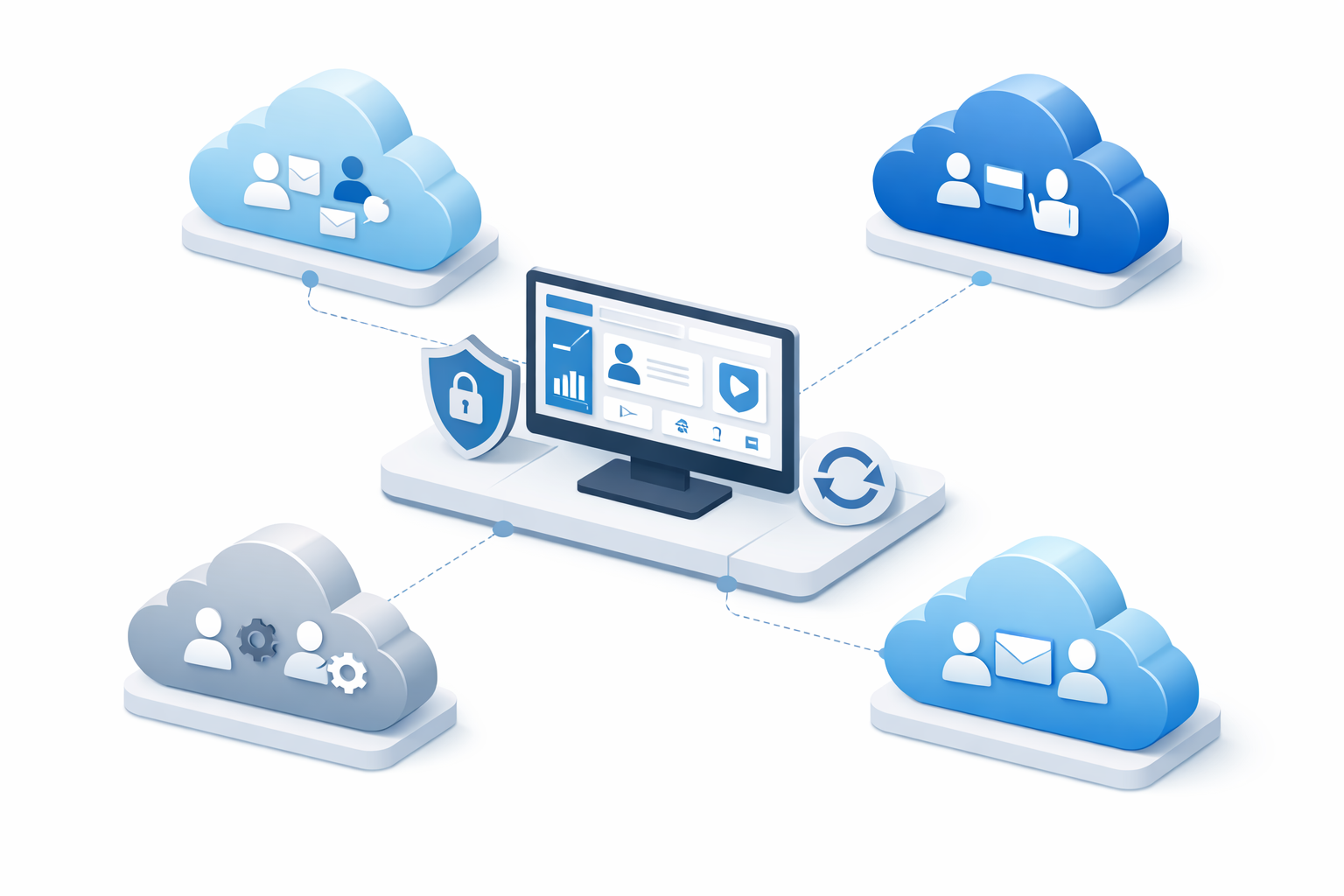
- API gateway/facade pattern: You build one gateway that sits between your platform and the aggregator’s API.
- Data mapping & event standardisation: Each provider may send different game-round events. The aggregator normalises that into a consistent schema.
- Real-time data and telemetry: For monitoring bets, wins, round counts, and latency.
- Back-office integration: API should include modules for analytics, bonus/campaign management, and player behaviour tracking.
- Mobile & multi-device support: The API must deliver games compatible with mobile devices, tablets, and desktops.
- Security & compliance architecture: Use authentication tokens, OAuth, SSL/TLS encryption, monitoring, and anti-fraud modules.
- Scalability & microservices: Plan for load spikes (for example, during a big jackpot event on December 31, 2026). Architecture must auto-scale.
- Versioning and changelog management: Because the aggregator may upgrade versions (for example, V1 to V2), your system must handle deprecation.
- Fallback and redundancy: If one provider’s games fail, the unified API should automatically shift players to other titles or show alternate content.
Choosing game providers and content: portfolio strategy
Having a unified API is one thing; choosing which providers and titles to include is another. Considerations include:
- Diversity of game types: include slots, table games, live dealer, virtual sports.
- Top providers vs niche studios: You need both major providers and upcoming studios offering unique localised content.
- Localisation & regulation fit: Choose providers compliant with target market regulators.
- Freshness of titles: Aim to add 100 new titles per month.
- Player-behaviour data: Use analytics to identify top-performing providers.
- Brand synergy & marketing value: Include branded content to increase engagement.
- Balance cost vs rights: Weigh cost per thousand game hours vs expected yield.
Compliance, security & regulatory issues
- Operating in the iGaming space means you must be vigilant on compliance and security. Key points:
- Licensing: You must have the correct operator licence.
- Fair gaming and RNG certification: Each provider’s RNG must be certified and compliant.
- Data protection: Comply with GDPR and local data laws.
- Anti-money laundering (AML) / Know Your Customer (KYC): Maintain records and controls.
- Game provider liability: Ensure all providers are legally allowed in your jurisdiction.
- Responsible gaming tools: Offer deposit limits and self-exclusion options.
- Security of integration: Use encrypted channels, tokenised API access, and audit logs.
- Player data segregation: Ensure wallet/balance systems remain consistent and secure.
- Update and patch management: The API provider must provide changelogs.
Real-world examples & case studies (with numbers)
Let’s look at some hands-on examples with dates and figures:
- In 2015, one major aggregator launched with a single API and claimed 35,000+ casino games available.
- In March 2024, one operator launched 10,000 new games in 90 days, increasing active daily users by 45%.
- A 2026 startup integrated 12,000+ games from 100+ suppliers and went live after 11 days—a 21% time save.
- Suppose you run a campaign on July 23, 2026: “Play 50 new games from 20 providers – win weekly prize pools.” Those games might account for 32% of new depositors in four weeks.
- An operator reported integration costs dropping from USD $120,000 (2022) to USD $35,000 (2025)—a 71% reduction.
- One platform reduced maintenance hours from 400 per month (2019) to 120 (2025) after switching to a unified API.
These examples show real value: bigger library, faster launch, lower cost, improved metrics.
Pitfalls to avoid & lessons learned
Even with a powerful approach, you might hit some pitfalls. Common traps include:
- Over-catalogue risk: Too many poorly curated games overwhelm players.
- Poor provider performance: Top 5 providers often drive 60% of playtime.
- Lack of front-end optimisation: A poor UI limits the impact of your catalogue.
- Latency issues: Slow API calls can ruin live dealer experiences.
- Regulatory mismatch: Using unlicensed providers can lead to fines.
- Data fragmentation: If analytics aren’t unified, player insights suffer.
- Overreliance on aan ggregator: Without backup plans, downtime can be costly.
Lesson learned: plan carefully, prioritise curation, monitor KPIs from day one, and maintain governance.
Future trends: what’s coming in 2026/2027 and beyond
Let’s fast-forward. What’s next for single casino API integration?
- Metaverse & VR games: Expect VR-casino content by Q4 2026.
- Esports & spectator betting bundles: Access both casino and esports content through aggregators.
- AI-powered personalisation: APIs will recommend games automatically.
- Blockchain and NFTs: NFT-backed items may become standard by 2027.
- Localized content explosion: More regional game providers are joining unified APIs.
- Regulatory evolution: Stricter audit and fairness requirements are emerging.
- Micro-games & instant play: Fast, mini-tournament formats added via API.
So for 2026 and beyond: it’s not just “get many games,” but “get many games + many formats + many regions + smart delivery.”



Leave a Reply