

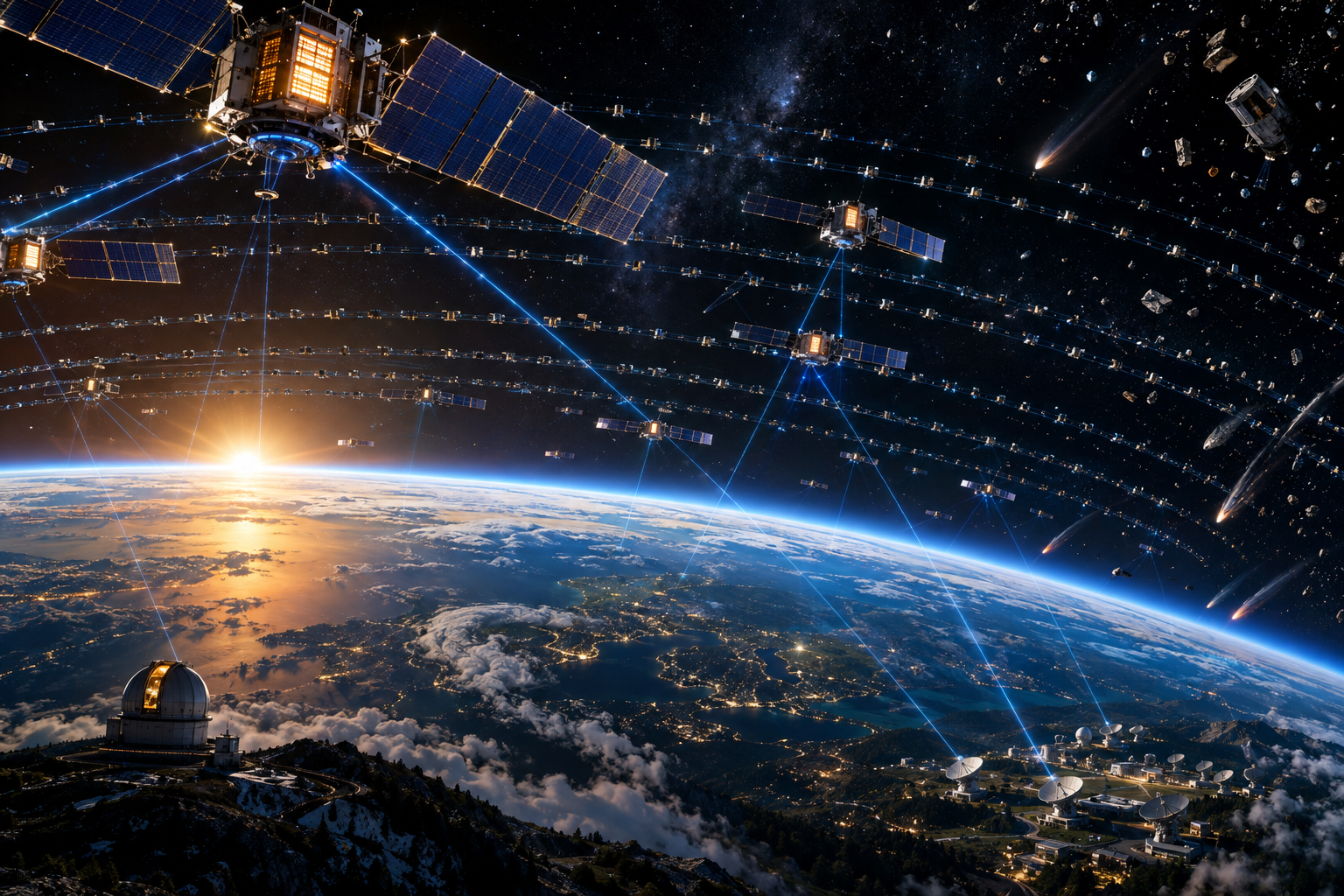
In a landmark decision, the Federal Communications Commission (FCC) has conditionally approved SpaceX’s proposal to deploy up to 1 million satellites as part of its ambitious Starmind project. This initiative aims to establish orbital data centers powered by AI, marking a significant step in the company’s push to harness solar energy from space to power AI capabilities on Earth.
The Starmind Project: A New Frontier in Space Computing
SpaceX’s Starmind project envisions a vast network of AI-equipped satellites that will serve as data centers in orbit. This initiative is designed to capture solar energy directly in space, providing a continuous and stable power source for AI operations on Earth. The satellites will use high-speed laser communications to link with SpaceX’s existing Starlink constellation, ensuring rapid data transmission back to terrestrial networks.
The FCC’s authorization is a pivotal milestone, allowing SpaceX to proceed with its plans under certain conditions. The company is required to launch its first operational satellite by 2033 and achieve the full 1 million satellite deployment by 2040. This timeline provides SpaceX with a 14-year regulatory runway to deploy what could become the most ambitious industrial project ever approved for spaceflight.
Regulatory Challenges and Opposition
Despite the FCC’s approval, the journey to this point has not been without challenges. The proposal faced significant opposition from various quarters, including Amazon, Viasat, and the American Astronomical Society. These groups raised concerns about potential orbital congestion, interference with astronomical research, and environmental impacts.
Amazon, which is developing its own satellite internet service, argued that SpaceX’s plans were overly ambitious and lacked sufficient detail. Critics also highlighted the potential for increased space debris and environmental issues related to satellite re-entry and disposal. The FCC, however, dismissed some of these concerns, stating they fell outside its regulatory authority.
Environmental Concerns and Mitigation Plans
The FCC’s decision did not address all environmental concerns, particularly those related to the long-term impacts of launching and disposing of such a large number of satellites. The commission noted that many of these issues fall outside its jurisdiction, particularly those concerning emissions from rocket launches and the potential atmospheric effects of satellite re-entries.
SpaceX has proposed using “graveyard” orbits for satellites above 600 kilometers that are no longer operational, a plan that the FCC has not yet approved due to insufficient details. This aspect of the project will require further regulatory review and possibly additional approvals.
The Competitive Landscape
SpaceX is not alone in its pursuit of space-based data centers. Competitors like Google and Blue Origin are also exploring similar initiatives. Google, for instance, recently launched its first AI server satellite under Project Suncatcher, with plans for further deployments in collaboration with Blue Origin.
These developments highlight a burgeoning interest in space as a frontier for computing infrastructure, driven by the unique advantages it offers in terms of power availability and operational continuity. The ability to harness solar energy continuously without the interruptions caused by Earth’s day-night cycle presents a significant advantage over terrestrial data centers.
Technical and Economic Hurdles
While the FCC’s approval is a crucial step forward, SpaceX faces significant technical and economic challenges ahead. The scale of the Starmind project requires substantial advancements in satellite manufacturing and launch capabilities. Moreover, cooling the AI processors in the vacuum of space presents a unique engineering challenge.
Financially, the project demands considerable investment, not only in manufacturing but also in securing reliable launch services. SpaceX’s partnership with companies like Nvidia for satellite computing components is a strategic move to address some of these hurdles. The collaboration aims to integrate high-performance computing hardware capable of operating in the harsh conditions of space.
Future Prospects and Industry Impact
The successful deployment of the Starmind constellation could redefine the landscape of computing infrastructure, potentially reducing reliance on land-based data centers. This shift could alleviate some of the environmental pressures associated with terrestrial data centers, such as land use and resource consumption.
However, the path to realizing this vision is fraught with uncertainties, and the broader implications—both environmental and regulatory—will likely continue to evolve. As SpaceX and its competitors push forward, the balance between innovation and responsible stewardship of space resources will remain a critical consideration.
In conclusion, the FCC’s approval of SpaceX’s Starmind project opens a new chapter in space-based technology development. While the initiative holds transformative potential, it also underscores the need for careful management of the challenges that accompany such ambitious endeavors. The next steps for SpaceX involve addressing the technical, regulatory, and environmental hurdles that lie ahead, as the company seeks to pioneer a new era of space-based AI computing.
Sources: The Verge, TechCrunch, Ars Technica, CNET, geekwire.com




Leave a Reply