
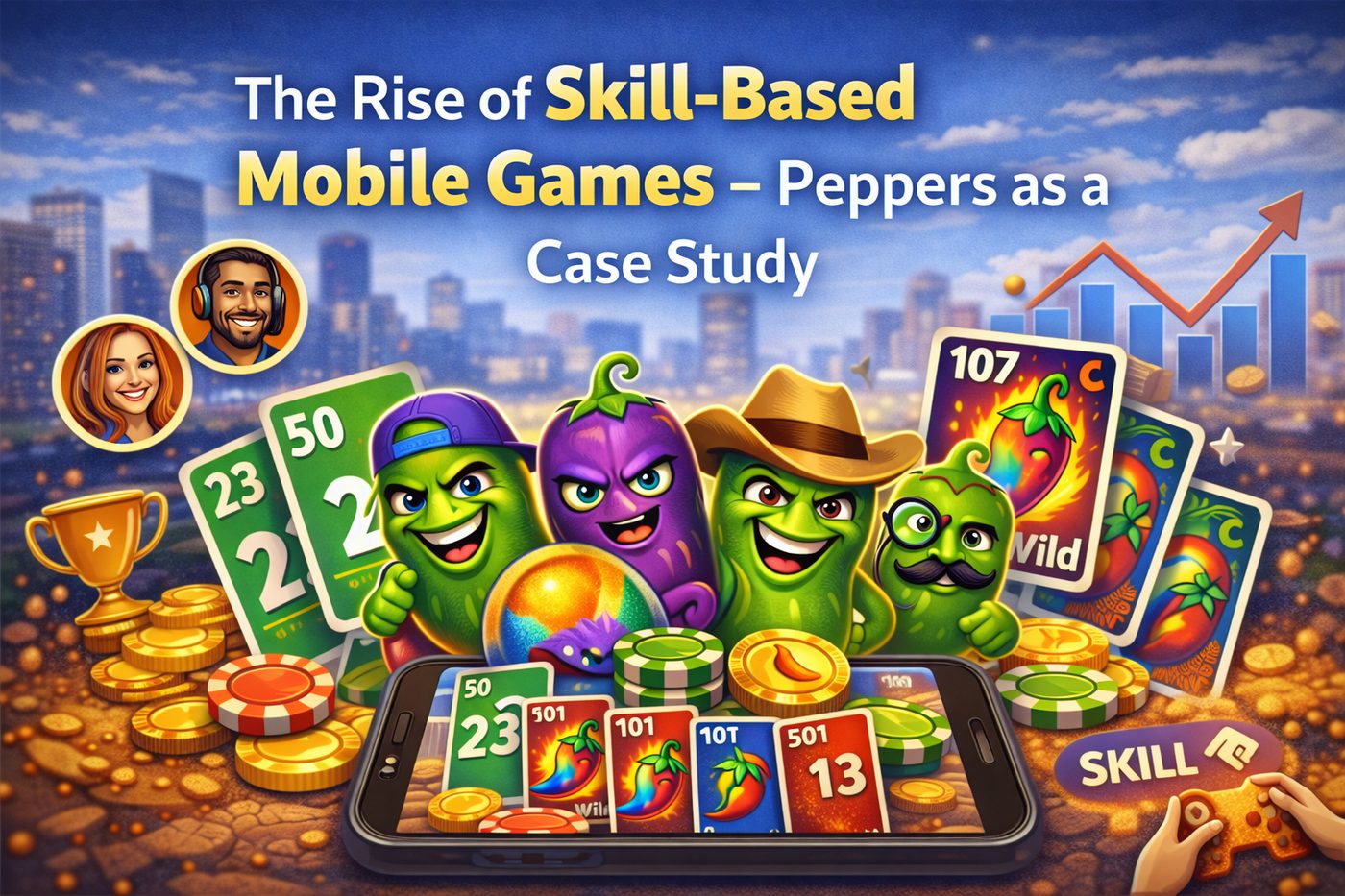
Mobile gaming has changed significantly over the past decade. In the early years, most games were built around simple mechanics and heavy reliance on luck. Players enjoyed quick entertainment, but the experience often lacked depth. Today, the industry is moving in a new direction. Users now prefer games where their decisions matter and improvement comes through practice and strategy.
This growing demand has led to the rise of the skill-based game category. One strong example of this trend is the Peppers online card game. By focusing on strategy, real competition, and long-term progression, Peppers shows how modern mobile games are evolving to meet player expectations.
Why Skill-Based Games Are Growing
Modern mobile players are more experienced than before. They seek challenges that reward critical thinking rather than relying on random outcomes. Games that rely only on luck often lose their appeal quickly because players feel they have little control over the results.
A Competitive Card Game like Peppers solves this problem by making performance depend on smart decisions. Players learn from each match, adjust their strategies, and see real improvement over time. This sense of progress keeps users engaged for longer periods.
Another reason for this shift is the rise of competitive gaming culture. Players enjoy ranking systems, leaderboards, and the ability to measure their performance against others.
The Importance of Real Player Interaction
One major factor behind the success of modern games is real-time interaction. Peppers stands out as a multiplayer card game that connects players, rather than relying solely on artificial opponents.
Competing against real people creates a more dynamic experience because:
- Every match feels different
- Opponent behavior cannot be predicted easily
- Strategy must adapt constantly
This level of interaction increases engagement and makes the game more rewarding for serious players.
A Unique Structure That Adds Depth
Most mobile card games follow traditional small-group formats. Peppers takes a different approach by offering a 7-player game experience. This larger format increases the complexity of each match.
With more players involved:
- The competition becomes more intense
- Timing becomes more important
- Risk management plays a bigger role
Players must think not only about their own strategy but also about how multiple opponents might act. This structure adds depth without making the game difficult to learn.
Global Access Through Online Play
Accessibility is another important part of modern gaming. Peppers is designed as an online card game, allowing users to compete with players from different regions at any time.
The game includes a turn timer to keep matches fast and focused. This ensures that gameplay remains smooth and fits easily into short breaks or daily routines.
Because matches are quick and competitive, the Peppers online card game appeals to both casual users and serious players who want regular challenges.
Strategy Inspired by Classic Card Games
Although Peppers introduces new mechanics, it also draws inspiration from traditional formats. The gameplay includes elements similar to a trick taking game, where selecting the right card at the right time is the key to winning.
Each round carries increasing value, forcing players to make important decisions:
- Should you secure early points?
- Or save strong cards for later rounds?
This risk-and-reward system creates tension and keeps players fully engaged throughout the match.
Practice and Improvement Without Pressure
One reason Peppers works well as a case study is its balanced approach to learning. While the main focus is competition, the game also functions as an offline card game.
Offline mode allows players to:
- Learn the rules
- Experiment with strategies
- Understand card values
- Build confidence before playing online
This feature helps new players enter the competitive environment without feeling overwhelmed.
The Role of Rankings in Player Retention
Long-term engagement is essential for any modern mobile game. Peppers supports this through a global ranking system, making it a strong leaderboard game.
Players earn rewards and climb through different levels based on their performance. The more matches they win, the higher their position becomes. This system creates a clear sense of achievement and encourages players to keep improving.
For many users, reaching higher ranks becomes a long-term goal, which increases retention and overall activity.
Why Peppers Represents the Future
The success of skill-focused mobile games comes from combining several key elements, and Peppers includes all of them:
Simple Rules with Strategic Depth
New players can learn quickly, while experienced users can develop advanced strategies.
Fast but Meaningful Matches
Games are short enough for mobile play but still require careful decision-making.
Real Competition
Playing against real opponents keeps the experience fresh and challenging.
Progression and Rewards
Ranking systems and rewards give players a reason to stay active.
These features reflect the direction mobile gaming is moving toward, where quality gameplay matters more than simple entertainment.
Lessons from the Peppers Case Study
Looking at Peppers as a case study shows several important trends in the mobile gaming industry:
- Players prefer control over outcomes rather than pure luck.
- Real-player competition increases engagement.
- Ranking systems improve long-term retention.
- Practice modes help onboard new users.
- Unique formats, like a seven-player structure, create differentiation.
Games that combine these elements are more likely to succeed in today’s competitive market.
Final Thoughts
The rise of the skill-based game category shows that mobile gaming is becoming more mature. Players now expect depth, fairness, and meaningful competition. They want games where practice leads to improvement and smart decisions lead to success.
Peppers are a strong example of this evolution. As a multiplayer card game and competitive card game, it combines strategic gameplay, real-player interaction, and long-term progression. Its unique format, global competition, and balanced learning system make the Peppers online card game a clear representation of where mobile gaming is headed.
As the industry continues to grow, games that focus on skill, strategy, and player progression will define the future. Peppers already reflects this direction and stands as a strong case study for the next generation of mobile card experiences.




Leave a Reply