
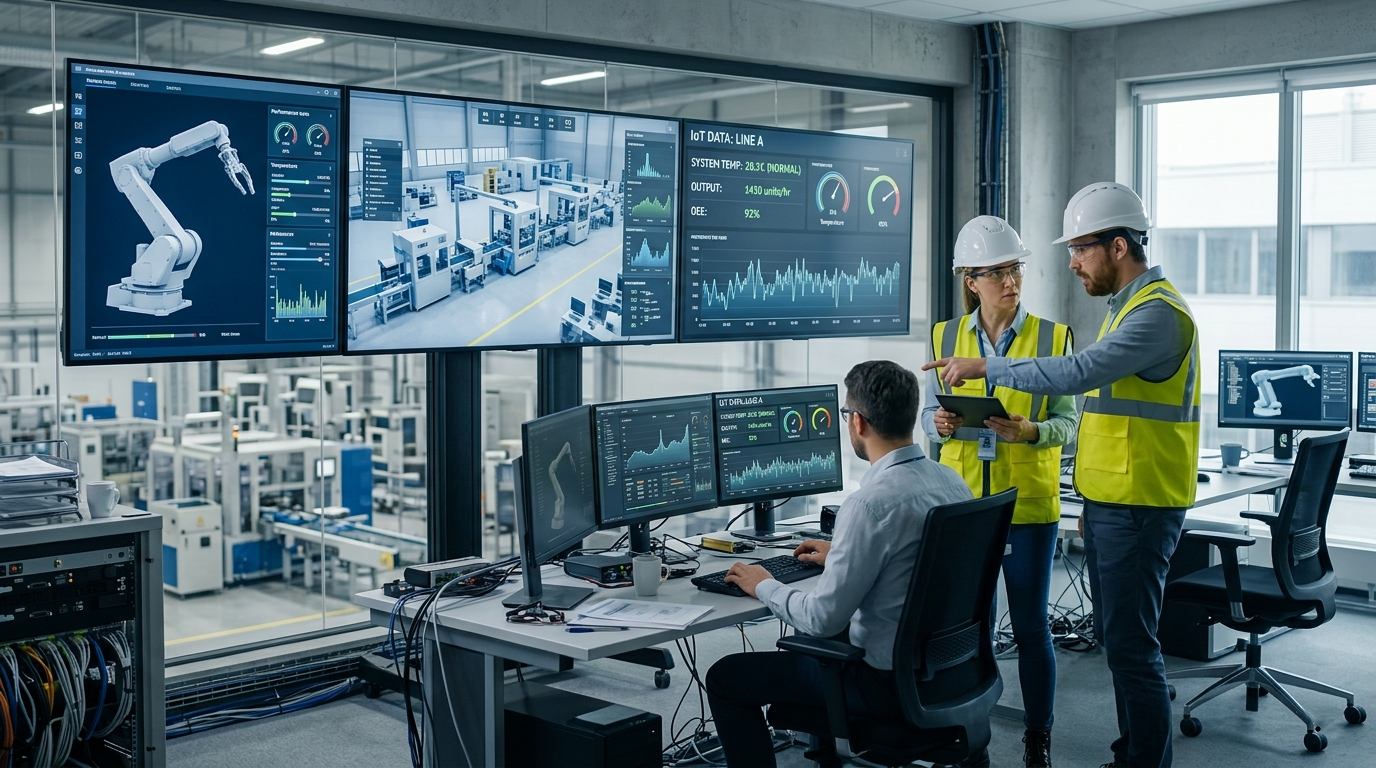
Digital transformation has become more than just a buzzword in today’s technology landscape. Among the most revolutionary innovations reshaping how businesses operate and compete is digital twin technology, a sophisticated approach that bridges the physical and digital worlds in ways previously confined to science fiction.
What is Digital Twin Technology?
A digital twin is a virtual replica of a physical object, process, or system that mirrors its real-world counterpart in real-time. Think of it as a living digital shadow that continuously updates based on data collected from sensors, IoT devices, and other connected technologies.
Unlike simple 3D models or simulations, digital twins are dynamic and interactive. They evolve alongside their physical counterparts, learning from ongoing operations and environmental changes. This continuous synchronization creates unprecedented opportunities for monitoring, analysis, and optimization across virtually every industry.
The technology integrates several cutting-edge innovations:
- Internet of Things (IoT) sensors that collect real-time data from physical assets
- Artificial Intelligence and Machine Learning algorithms that analyze patterns and predict outcomes
- Cloud computing infrastructure that processes massive data streams
- Advanced visualization tools that make complex data accessible and actionable
The Evolution from Concept to Reality
Digital twin technology isn’t entirely new. NASA pioneered similar concepts during the Apollo missions, using ground-based replicas to troubleshoot problems in spacecraft millions of miles away. However, recent advances in computing power, sensor technology, and data analytics have transformed what was once an expensive, specialized tool into an accessible solution for businesses of all sizes.
Early implementations focused primarily on manufacturing and aerospace, where the technology helped engineers visualize and optimize complex systems. Today, digital twins have expanded into healthcare, urban planning, retail, energy, and countless other sectors.
The market reflects this explosive growth. Industry analysts project the global digital twin market will reach approximately $86 billion by 2028, growing at a compound annual rate exceeding 40%. This surge stems from businesses recognizing that digital twins deliver tangible competitive advantages and measurable ROI.
Manufacturing: The Pioneer Industry
Manufacturing remains at the forefront of digital twin adoption, and for good reason. Production facilities face constant pressure to maximize efficiency, minimize downtime, and maintain quality standards while adapting to changing market demands.
Digital twins enable manufacturers to:
Optimize Production Lines: Virtual replicas of entire production systems allow engineers to test modifications, workflow changes, and equipment upgrades without disrupting actual operations. Companies can simulate scenarios, identify bottlenecks, and validate improvements before committing physical resources.
Implement Predictive Maintenance: Rather than following fixed maintenance schedules or waiting for equipment failures, manufacturers use digital twins to monitor asset health continuously. The technology analyzes vibration patterns, temperature fluctuations, and other indicators to predict failures before they occur, typically reducing maintenance costs by 25-30% while extending equipment lifespan.
Ensure Quality Control: Digital twins track every stage of production, comparing actual performance against ideal specifications. This real-time quality monitoring catches defects early, reduces waste, and ensures consistent output.
Accelerate Product Development: Engineers test new product designs virtually, iterating rapidly without expensive physical prototyping. This approach compresses development cycles and enables more ambitious innovation.
Smart Cities: Building the Urban Future
City planners and government officials increasingly leverage digital twin technology to create more livable, efficient, and sustainable urban environments. Entire cities now exist as detailed virtual models that help decision-makers understand complex systems and plan improvements.
Singapore’s “Virtual Singapore” project stands as a pioneering example. This comprehensive digital twin models the entire city-state in 3D, incorporating buildings, infrastructure, terrain, and even real-time traffic patterns. Planners use this platform to:
- Test urban development proposals and visualize their impact
- Optimize traffic flow and public transportation routes
- Plan emergency response scenarios
- Model environmental factors like air quality and solar exposure
- Coordinate infrastructure maintenance across departments
Other major cities, including New York, Dubai, and Helsinki, have launched similar initiatives. These digital twins help municipalities address challenges ranging from traffic congestion and energy consumption to disaster preparedness and climate resilience.
Healthcare: Personalizing Patient Care
The healthcare industry has embraced digital twin technology with remarkable results, applying the concept not just to medical equipment but to individual patients.
Personalized Treatment Planning: Doctors create digital twins of patients’ hearts, organs, or entire physiological systems. These models help visualize how different treatments might affect individual patients, enabling personalized medicine based on unique biological characteristics rather than one-size-fits-all protocols.
Hospital Optimization: Healthcare facilities use digital twins to model patient flow, resource allocation, and staffing requirements. This optimization reduces wait times, improves care quality, and maximizes operational efficiency.
Medical Device Development: Manufacturers test new medical devices and equipment using digital twins of human systems, accelerating innovation while ensuring safety.
Surgical Planning: Surgeons review digital twins of patients’ anatomy before complex procedures, identifying potential complications and planning optimal approaches. This preparation improves outcomes and reduces surgical risks.
Energy Sector: Powering Efficiency
Energy companies face unique challenges in managing vast, geographically dispersed infrastructure while meeting reliability standards and environmental requirements. Digital twin technology addresses these challenges across the energy value chain.
Wind Farm Optimization: Energy companies create digital twins of entire wind farms, modeling turbine performance under various weather conditions. This allows operators to optimize blade pitch, rotation speed, and maintenance schedules for maximum energy generation.
Grid Management: Utility companies model entire electrical grids as digital twins, enabling real-time monitoring and optimization of power distribution. These systems predict demand fluctuations, identify potential failures, and balance loads across networks.
Oil and Gas Operations: Digital twins monitor pipelines, refineries, and drilling operations, detecting anomalies that could indicate leaks, corrosion, or equipment stress. This predictive capability prevents environmental disasters and costly shutdowns.
Renewable Energy Integration: As power grids incorporate more variable renewable sources, digital twins help balance supply and demand, integrating solar, wind, and traditional generation seamlessly.
Retail and E-Commerce: Enhancing Customer Experience
Retailers leverage digital twin technology to optimize both physical stores and online shopping experiences, creating seamless omnichannel strategies.
Store Layout Optimization: Retailers create digital twins of physical stores, testing different product placements, traffic flows, and displays virtually. This data-driven approach to merchandising increases sales while improving customer experience.
Supply Chain Visibility: Digital twins model entire supply chains, providing real-time visibility into inventory levels, shipment status, and logistics operations. This transparency enables better planning and faster response to disruptions.
Virtual Try-On Experiences: Some retailers create digital twins of products, allowing customers to visualize items in their own spaces using augmented reality. This reduces returns and increases purchase confidence.
Warehouse Management: Distribution centers use digital twins to optimize picking routes, storage strategies, and automation systems, dramatically improving fulfillment speed and accuracy.
Automotive Industry: Driving Innovation
Automotive manufacturers have adopted digital twin technology throughout vehicle lifecycles, from initial design through years of road use.
Vehicle Design and Testing: Engineers create digital twins of new vehicle models, simulating aerodynamics, crash safety, and performance under countless conditions. This virtual testing accelerates development while reducing reliance on expensive physical prototypes.
Manufacturing Process Optimization: Assembly plants exist as detailed digital twins, allowing manufacturers to optimize production workflows, robot programming, and quality control processes.
Connected Car Services: Modern vehicles generate massive amounts of operational data. Manufacturers create digital twins of individual cars, monitoring performance, predicting maintenance needs, and enabling over-the-air updates.
Autonomous Vehicle Development: Self-driving car companies test algorithms in virtual environments modeled as digital twins of real-world locations, safely simulating millions of miles of driving scenarios.
Implementation Challenges and Considerations
Despite its transformative potential, digital twin technology presents implementation challenges that organizations must address:
Data Quality and Integration: Digital twins require accurate, timely data from diverse sources. Poor data quality undermines the entire system, producing unreliable insights that can damage decision-making rather than improve it.
Technical Infrastructure: Implementing digital twins demands a robust computing infrastructure capable of processing and analyzing massive data streams in real-time. This often requires significant investment in cloud services, edge computing, or on-premises hardware.
Cybersecurity Concerns: Digital twins that control or influence physical systems present attractive targets for cyberattacks. Organizations must implement comprehensive security measures protecting both virtual models and their physical counterparts.
Skills Gap: Developing and maintaining digital twin systems requires specialized expertise spanning data science, domain knowledge, and systems integration. Many organizations struggle to find or develop talent with these multidisciplinary skills.
Change Management: Successful digital twin adoption requires cultural transformation, not just technology deployment. Organizations must cultivate data-driven decision-making cultures where insights from virtual models influence actual operations.
The Future of Digital Twin Technology
Emerging trends promise to expand digital twin capabilities even further:
AI-Powered Autonomous Optimization: Future digital twins won’t just simulate and predict, they’ll make decisions and implement optimizations automatically within defined parameters, fundamentally changing human-machine collaboration.
AR and VR Integration: Immersive technologies will make digital twins more accessible and intuitive. Engineers will “walk through” virtual facilities, interact with equipment, and visualize data in spatial contexts.
Blockchain Integration: Some organizations are exploring blockchain technology to create immutable records of digital twin data, particularly valuable for regulatory compliance and supply chain transparency.
Ecosystem-Level Twins: Beyond individual assets or systems, future digital twins will model entire ecosystems, industries, or economies, enabling unprecedented systemic understanding and optimization.
Sustainability Applications: Digital twins will play crucial roles in achieving environmental goals, modeling carbon footprints, testing sustainable alternatives, and optimizing resource consumption across value chains.
Getting Started with Digital Twin Technology
Organizations interested in digital twin adoption should consider this strategic approach:
- Identify High-Value Use Cases: Start with specific applications offering clear ROI rather than attempting enterprise-wide implementation immediately.
- Assess Data Readiness: Evaluate existing data collection capabilities and identify gaps that need addressing.
- Build Cross-Functional Teams: Combine domain expertise with technical capabilities, ensuring diverse perspectives inform implementation.
- Start Small and Scale: Pilot digital twin projects in controlled environments, learn from results, then expand successful applications.
- Partner Strategically: Consider working with technology vendors and consultants who bring implementation experience and technical capabilities.
Conclusion
Digital twin technology represents far more than another innovation trend. It fundamentally transforms how organizations understand and optimize operations, enabling capabilities that seemed impossible just years ago. From manufacturing plants and hospitals to entire cities and individual products, digital twins deliver measurable improvements in efficiency, quality, and innovation speed.
As computing power continues increasing, sensors become more affordable, and AI algorithms grow more sophisticated, digital twin applications will only expand. Organizations that embrace this technology now position themselves at the forefront of their industries, building competitive advantages that compound over time.
The question facing business and technology leaders isn’t whether to adopt digital twin technology, but how quickly they can integrate it effectively into their operations. Those who move decisively today will shape the competitive landscape of tomorrow.


Leave a Reply